Blog
Trend Report
The Giant and the Challenger: Asahi's Fight to Stay on Top
Japan beer market analysis: Asahi leads search visibility but is losing ground to fast-growing Orion. Explore demand trends, regional battlegrounds and risks.

Milena Ozeki
Senior/Lead Product Manager

Japan's beer market is dominated by draft beer, though the category faces overall demand decline. Asahi leads in search visibility but faces negative growth, contrasting with rising challenger Orion. Success lies in stabilizing core draft products, defending Tokyo, and targeting resilient segments.
A Big Market Where Brands, Not Categories, Win
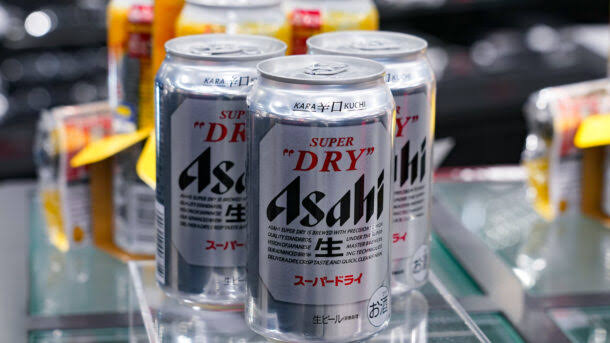
Japan beer search demand is concentrated in familiar, mainstream drinking occasions rather than fragmented specialty exploration. Draft beer dominates category interest, while leading branded queries show that consumers enter the market through well-known labels and specific drinking occasions. For an investor, this points to a large but brand-led demand pool where scale, distribution, and distinctive positioning matter more than broad category education.
Draft Beer Owns Seven in Ten Searches
Draft beer is the clear center of gravity, representing roughly seven in ten category-level searches across the beer types reviewed. Lager and ale form the next tier, but their smaller scale suggests they are more useful as portfolio extensions than as standalone growth engines.
Investment implication: Asahi’s strongest value creation route should prioritize winning within mainstream refreshment occasions first, then use adjacent styles to broaden occasions and trade-up.
Draft dwarfs every other beer style
Six-month search volume by beer type, sorted by demand concentration.

Mainstream Occasions Drive the Category
The category shows a mature demand profile: high mainstream volume, limited dispersion into smaller styles, and strong reliance on recognizable propositions.
Mainstream drinking occasions dominate. Draft beer materially outpaces every other type, making it the core addressable audience for any acquisition thesis.
Lager is the most resilient scaled secondary segment. It is smaller than draft, but its softer decline makes it a logical target for retention and premiumization plays.
Craft-style niches remain investable, but selective. Ale and IPA have meaningful but narrower search pools, making them better suited to targeted innovation than broad national expansion.
Consumers Search by Brand, Not by Style
The highest-volume searches are heavily branded, led by Orion Beer, Suntory draft, Yebisu, Corona, and Guinness. This indicates that consumer consideration is already shaped by known labels and product-specific associations rather than generic category browsing.
The presence of draft, non-alcohol, and flavored/mixed-drink terms also signals multiple entry points: everyday refreshment, moderation-led occasions, and social experimentation. Asahi should treat search demand as a portfolio battlefield, not a single-product funnel.
Branded queries lead the search

No Rising Tide: Growth Must Come From Share
Growth momentum is uneven and selective. At the broad beer-type level, the market is not showing category-wide acceleration; all reviewed types are declining year over year. The investment case therefore depends less on riding a rising category tide and more on improving Asahi’s share capture, occasion relevance, and conversion in the pockets that remain resilient.
Lager Holds Firm While Draft Slips
Lager is the closest thing to a defensive growth pocket, with only a modest decline versus deeper pressure in draft and white beer. Draft remains by far the largest opportunity, but its contraction means Asahi needs to separate brand-specific momentum from category drag.
Social signals add nuance: PSB shows very high short-form video visibility, and Kinmugi also has meaningful social reach. These signals suggest that campaigns and product narratives can still create attention even when broad category demand is soft.
Every Style Is Shrinking, but Some Hold Up Better
No beer type shows positive year-over-year growth, so the practical investment lens is resilience. Lager and brown beer are declining least, while draft’s larger decline is more material because of its outsized volume base.
Implication for diligence: validate whether Asahi’s draft weakness is structural, campaign-related, or a normalizing effect after prior demand spikes. That question has direct relevance to the revenue durability case.
Lager declines least; draft drags most
Year-over-year growth by beer type, shown as ratios where 1 equals 100%.

Asahi Leads on Visibility but Is Losing Momentum
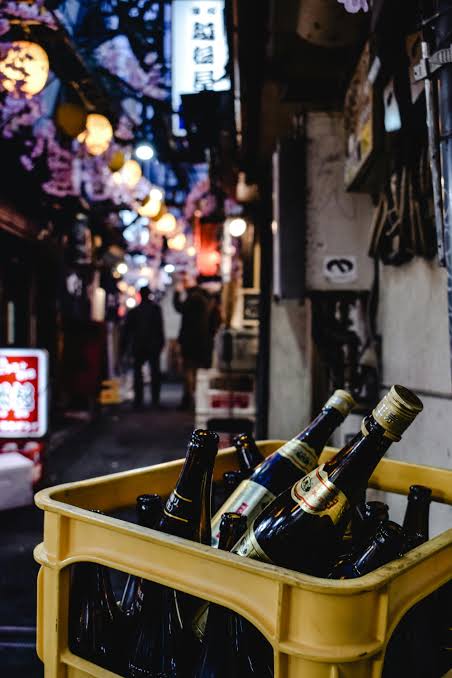
Asahi has a powerful visibility base, but the competitive picture is not risk-free. Asahi Draft Beer is the clear search-volume leader among brands reviewed, yet its negative growth contrasts sharply with Orion Beer’s strong expansion. The acquisition thesis should therefore separate Asahi’s scale advantage from its current momentum challenge.
Asahi Has Twice Orion's Visibility, and It's Shrinking
Asahi Draft Beer is the leading brand in search visibility, with more than 1.8 million six-month searches and roughly twice the visibility of Orion Beer. Asahi-branded entries together account for about 27% of reviewed brand demand, underscoring a strong awareness platform.
However, the leader’s growth is negative. That makes Asahi a scale leader with momentum risk, not an undisputed compounder. The IC question is whether brand equity can be reactivated efficiently enough to stabilize growth.
Asahi Draft tops brand visibility
Top brands ranked by six-month search volume as a proxy for digital visibility.

Orion Is the Challenger to Watch
Orion Beer combines meaningful scale with strong positive growth, making it the most important competitive threat in the current demand picture. Guinness Black Beer and Sapporo also show positive momentum, while several large mainstream rivals are flat to declining.
For Asahi, the risk is not simply losing volume to one rival; it is losing cultural relevance to brands that feel more distinctive, regional, premium, or occasion-specific.
Orion is up 40% while Asahi is down 26%
Year-over-year growth for the highest-volume brands, shown as ratios where 1 equals 100%.

Two Battlegrounds: Local Loyalty and Urban Scale

Regional demand is concentrated around a mix of local identity and large urban markets. Okinawa is an exceptional hotspot for Orion Beer, while Tokyo acts as the broadest competitive battleground across Orion, Yebisu, Asahi Draft Beer, and Suntory. Asahi’s regional strategy should combine urban defense with selective local whitespace activation.
Okinawa Belongs to Orion; Tokyo Is Up for Grabs
Okinawa shows extraordinary affinity for Orion Beer, reflecting a powerful regional stronghold that Asahi should treat as difficult-to-penetrate territory. Tokyo, by contrast, is highly competitive and multi-brand, making it the best market for share capture through media efficiency, on-premise visibility, and product storytelling.
Asahi Draft Beer’s strongest affinity appears in Tokyo, with additional depth across major urban and regional markets. That supports a playbook focused on defending metropolitan relevance while selectively targeting weaker competitor strongholds.
Okinawa's Orion loyalty is far ahead of every other region
Highest regional affinity signals among leading beer brands and important demand pockets.

Attractive Upside, Execution Required

The investment case is attractive but operationally dependent. Asahi offers strong scale and visibility, yet the market evidence points to category softness, challenger momentum, and regional concentration. Value creation will likely come from sharper portfolio focus, better occasion targeting, and disciplined brand reinvestment rather than passive category growth.
Five Levers to Reignite Growth
Rebuild draft-led relevance. Draft is the largest demand pool, so even modest share recovery would have outsized impact.
Use lager resilience as a stabilizer. Lager’s softer decline suggests room for retention, packaging, and occasion-based premiumization.
Exploit branded entry points. Top searches are product-specific, creating an opportunity to optimize around high-intent branded journeys.
Leverage social momentum selectively. PSB’s very high TikTok visibility shows that beer brands can still break through culturally when the message is distinctive.
Target urban battlegrounds. Tokyo offers broad multi-brand demand and is the clearest market for paid media, retail, and on-premise activation.
What Could Erode the Thesis
Category softness. Every reviewed beer type is declining year over year, limiting the benefit of market beta.
Asahi momentum gap. Asahi Draft Beer leads in visibility but is materially down, creating a need to validate revenue durability.
Challenger pressure. Orion Beer’s scale and growth make it the clearest share-of-attention threat.
Regional defensibility. Some hotspots appear brand-owned, especially Okinawa for Orion, which may cap near-term expansion returns.
Campaign dependence. Social reach can spike quickly, but the diligence question is whether attention converts into repeat demand and profitable volume.
The Playbook: Turn Scale Into Momentum
The acquisition thesis should be framed as a scale brand turnaround with selective growth options. Asahi has the visibility foundation to support value creation, but the plan must prove that brand investment can improve momentum faster than category softness erodes the base.
Six Moves for the Investment Committee
Prioritize a draft-beer recovery plan. Draft is the largest demand pool, while Asahi Draft Beer is the leading brand by visibility. Expected outcome: stabilize the core revenue base and protect the most valuable demand franchise.
Investigate the Asahi Draft Beer decline before valuation sign-off. Its scale is attractive, but negative growth is the central diligence risk. Expected outcome: distinguish fixable marketing execution from structural demand erosion.
Build a challenger response against Orion Beer. Orion combines high volume with strong growth, especially in regional affinity. Expected outcome: prevent further share-of-attention leakage and sharpen Asahi’s regional competitive playbook.
Use Tokyo as the primary value-creation test market. Tokyo shows strong multi-brand demand, including meaningful Asahi Draft Beer affinity. Expected outcome: validate media, retail, and on-premise interventions before national rollout.
Extend into resilient adjacent occasions. Lager and moderation-related searches suggest room for occasions beyond classic draft consumption. Expected outcome: broaden the portfolio without diluting Asahi’s mainstream strength.
Treat social visibility as a conversion funnel, not just awareness. PSB’s social reach demonstrates attention potential, but the investment plan should tie campaigns to branded search, retail activation, and repeat purchase. Expected outcome: improve marketing efficiency and reduce dependence on short-lived buzz.
Japan's beer market is dominated by draft beer, though the category faces overall demand decline. Asahi leads in search visibility but faces negative growth, contrasting with rising challenger Orion. Success lies in stabilizing core draft products, defending Tokyo, and targeting resilient segments.
A Big Market Where Brands, Not Categories, Win
Japan beer search demand is concentrated in familiar, mainstream drinking occasions rather than fragmented specialty exploration. Draft beer dominates category interest, while leading branded queries show that consumers enter the market through well-known labels and specific drinking occasions. For an investor, this points to a large but brand-led demand pool where scale, distribution, and distinctive positioning matter more than broad category education.
Draft Beer Owns Seven in Ten Searches
Draft beer is the clear center of gravity, representing roughly seven in ten category-level searches across the beer types reviewed. Lager and ale form the next tier, but their smaller scale suggests they are more useful as portfolio extensions than as standalone growth engines.
Investment implication: Asahi’s strongest value creation route should prioritize winning within mainstream refreshment occasions first, then use adjacent styles to broaden occasions and trade-up.
Draft dwarfs every other beer style
Six-month search volume by beer type, sorted by demand concentration.
Mainstream Occasions Drive the Category
The category shows a mature demand profile: high mainstream volume, limited dispersion into smaller styles, and strong reliance on recognizable propositions.
Mainstream drinking occasions dominate. Draft beer materially outpaces every other type, making it the core addressable audience for any acquisition thesis.
Lager is the most resilient scaled secondary segment. It is smaller than draft, but its softer decline makes it a logical target for retention and premiumization plays.
Craft-style niches remain investable, but selective. Ale and IPA have meaningful but narrower search pools, making them better suited to targeted innovation than broad national expansion.
Consumers Search by Brand, Not by Style
The highest-volume searches are heavily branded, led by Orion Beer, Suntory draft, Yebisu, Corona, and Guinness. This indicates that consumer consideration is already shaped by known labels and product-specific associations rather than generic category browsing.
The presence of draft, non-alcohol, and flavored/mixed-drink terms also signals multiple entry points: everyday refreshment, moderation-led occasions, and social experimentation. Asahi should treat search demand as a portfolio battlefield, not a single-product funnel.
Branded queries lead the search
No Rising Tide: Growth Must Come From Share
Growth momentum is uneven and selective. At the broad beer-type level, the market is not showing category-wide acceleration; all reviewed types are declining year over year. The investment case therefore depends less on riding a rising category tide and more on improving Asahi’s share capture, occasion relevance, and conversion in the pockets that remain resilient.
Lager Holds Firm While Draft Slips
Lager is the closest thing to a defensive growth pocket, with only a modest decline versus deeper pressure in draft and white beer. Draft remains by far the largest opportunity, but its contraction means Asahi needs to separate brand-specific momentum from category drag.
Social signals add nuance: PSB shows very high short-form video visibility, and Kinmugi also has meaningful social reach. These signals suggest that campaigns and product narratives can still create attention even when broad category demand is soft.
Every Style Is Shrinking, but Some Hold Up Better
No beer type shows positive year-over-year growth, so the practical investment lens is resilience. Lager and brown beer are declining least, while draft’s larger decline is more material because of its outsized volume base.
Implication for diligence: validate whether Asahi’s draft weakness is structural, campaign-related, or a normalizing effect after prior demand spikes. That question has direct relevance to the revenue durability case.
Lager declines least; draft drags most
Year-over-year growth by beer type, shown as ratios where 1 equals 100%.
Asahi Leads on Visibility but Is Losing Momentum
Asahi has a powerful visibility base, but the competitive picture is not risk-free. Asahi Draft Beer is the clear search-volume leader among brands reviewed, yet its negative growth contrasts sharply with Orion Beer’s strong expansion. The acquisition thesis should therefore separate Asahi’s scale advantage from its current momentum challenge.
Asahi Has Twice Orion's Visibility, and It's Shrinking
Asahi Draft Beer is the leading brand in search visibility, with more than 1.8 million six-month searches and roughly twice the visibility of Orion Beer. Asahi-branded entries together account for about 27% of reviewed brand demand, underscoring a strong awareness platform.
However, the leader’s growth is negative. That makes Asahi a scale leader with momentum risk, not an undisputed compounder. The IC question is whether brand equity can be reactivated efficiently enough to stabilize growth.
Asahi Draft tops brand visibility
Top brands ranked by six-month search volume as a proxy for digital visibility.
Orion Is the Challenger to Watch
Orion Beer combines meaningful scale with strong positive growth, making it the most important competitive threat in the current demand picture. Guinness Black Beer and Sapporo also show positive momentum, while several large mainstream rivals are flat to declining.
For Asahi, the risk is not simply losing volume to one rival; it is losing cultural relevance to brands that feel more distinctive, regional, premium, or occasion-specific.
Orion is up 40% while Asahi is down 26%
Year-over-year growth for the highest-volume brands, shown as ratios where 1 equals 100%.
Two Battlegrounds: Local Loyalty and Urban Scale
Regional demand is concentrated around a mix of local identity and large urban markets. Okinawa is an exceptional hotspot for Orion Beer, while Tokyo acts as the broadest competitive battleground across Orion, Yebisu, Asahi Draft Beer, and Suntory. Asahi’s regional strategy should combine urban defense with selective local whitespace activation.
Okinawa Belongs to Orion; Tokyo Is Up for Grabs
Okinawa shows extraordinary affinity for Orion Beer, reflecting a powerful regional stronghold that Asahi should treat as difficult-to-penetrate territory. Tokyo, by contrast, is highly competitive and multi-brand, making it the best market for share capture through media efficiency, on-premise visibility, and product storytelling.
Asahi Draft Beer’s strongest affinity appears in Tokyo, with additional depth across major urban and regional markets. That supports a playbook focused on defending metropolitan relevance while selectively targeting weaker competitor strongholds.
Okinawa's Orion loyalty is far ahead of every other region
Highest regional affinity signals among leading beer brands and important demand pockets.
Attractive Upside, Execution Required
The investment case is attractive but operationally dependent. Asahi offers strong scale and visibility, yet the market evidence points to category softness, challenger momentum, and regional concentration. Value creation will likely come from sharper portfolio focus, better occasion targeting, and disciplined brand reinvestment rather than passive category growth.
Five Levers to Reignite Growth
Rebuild draft-led relevance. Draft is the largest demand pool, so even modest share recovery would have outsized impact.
Use lager resilience as a stabilizer. Lager’s softer decline suggests room for retention, packaging, and occasion-based premiumization.
Exploit branded entry points. Top searches are product-specific, creating an opportunity to optimize around high-intent branded journeys.
Leverage social momentum selectively. PSB’s very high TikTok visibility shows that beer brands can still break through culturally when the message is distinctive.
Target urban battlegrounds. Tokyo offers broad multi-brand demand and is the clearest market for paid media, retail, and on-premise activation.
What Could Erode the Thesis
Category softness. Every reviewed beer type is declining year over year, limiting the benefit of market beta.
Asahi momentum gap. Asahi Draft Beer leads in visibility but is materially down, creating a need to validate revenue durability.
Challenger pressure. Orion Beer’s scale and growth make it the clearest share-of-attention threat.
Regional defensibility. Some hotspots appear brand-owned, especially Okinawa for Orion, which may cap near-term expansion returns.
Campaign dependence. Social reach can spike quickly, but the diligence question is whether attention converts into repeat demand and profitable volume.
The Playbook: Turn Scale Into Momentum
The acquisition thesis should be framed as a scale brand turnaround with selective growth options. Asahi has the visibility foundation to support value creation, but the plan must prove that brand investment can improve momentum faster than category softness erodes the base.
Six Moves for the Investment Committee
Prioritize a draft-beer recovery plan. Draft is the largest demand pool, while Asahi Draft Beer is the leading brand by visibility. Expected outcome: stabilize the core revenue base and protect the most valuable demand franchise.
Investigate the Asahi Draft Beer decline before valuation sign-off. Its scale is attractive, but negative growth is the central diligence risk. Expected outcome: distinguish fixable marketing execution from structural demand erosion.
Build a challenger response against Orion Beer. Orion combines high volume with strong growth, especially in regional affinity. Expected outcome: prevent further share-of-attention leakage and sharpen Asahi’s regional competitive playbook.
Use Tokyo as the primary value-creation test market. Tokyo shows strong multi-brand demand, including meaningful Asahi Draft Beer affinity. Expected outcome: validate media, retail, and on-premise interventions before national rollout.
Extend into resilient adjacent occasions. Lager and moderation-related searches suggest room for occasions beyond classic draft consumption. Expected outcome: broaden the portfolio without diluting Asahi’s mainstream strength.
Treat social visibility as a conversion funnel, not just awareness. PSB’s social reach demonstrates attention potential, but the investment plan should tie campaigns to branded search, retail activation, and repeat purchase. Expected outcome: improve marketing efficiency and reduce dependence on short-lived buzz.
Milena Ozeki
Senior/Lead Product Manager
Share

