Blog
Trend Report
Which Lactose-Free Dairy Brands Get Noticed in AI Answers?
Green Valley appears in AI answers about lactose-free dairy but trails rivals in placement. Explore how stronger content could help it stand out.

Milena Ozeki
Senior/Lead Product Manager

When people ask AI about lactose-free dairy, products such as butter, milk, and yogurt take center stage - with no single brand dominating the answers analyzed. Green Valley is part of the conversation, but it typically appears later than key competitors and receives neutral mentions rather than clear recommendations.
With its website already a prominent source, the brand has a foundation to build on. The opportunity is to give AI answers clearer reasons to recommend Green Valley, beyond simply telling shoppers where to buy it.
How Green Valley Appears in AI Answers About Lactose-Free Dairy
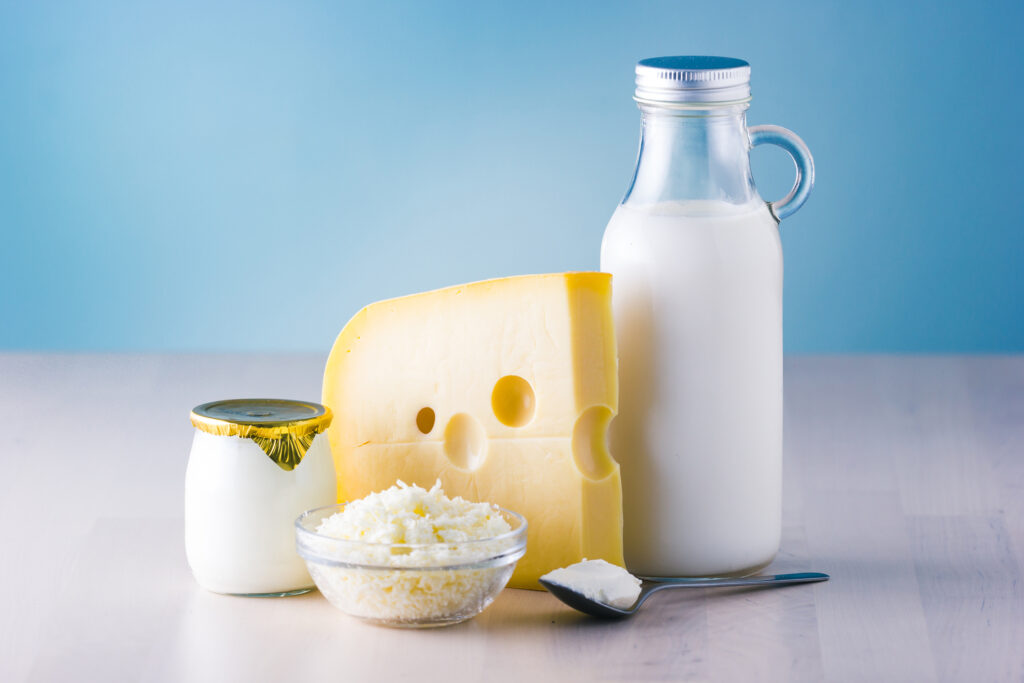
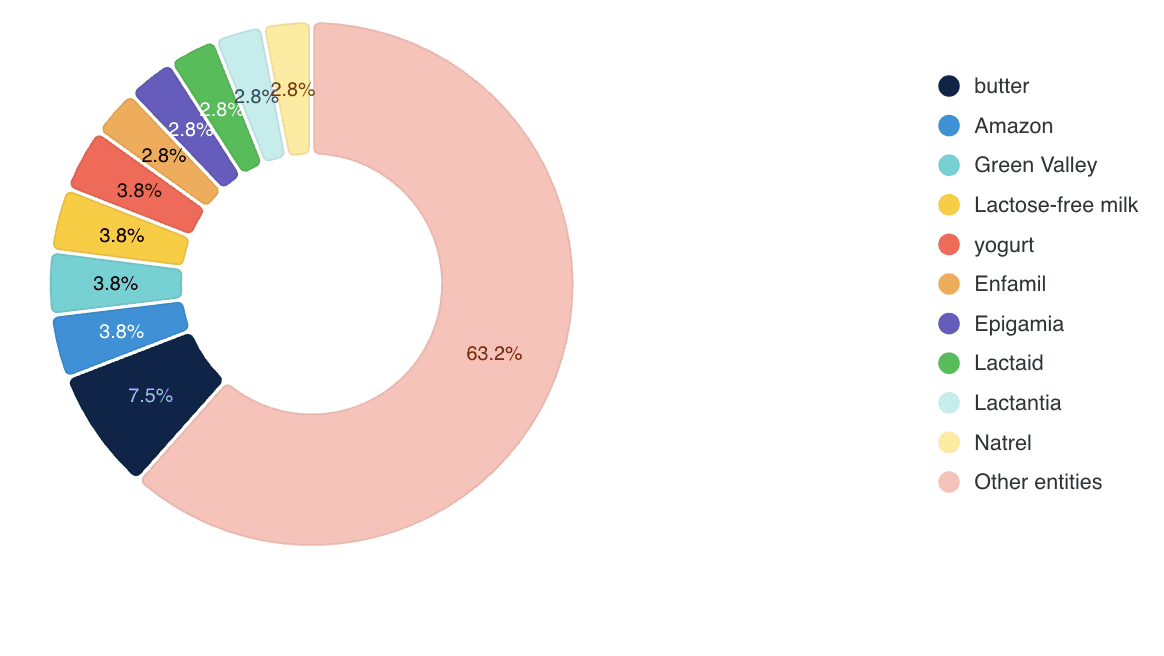
The lactose-free conversation is fragmented rather than dominated by one brand. Product-led needs, especially butter, milk, and yogurt, create the strongest entry points, while brand mentions are spread across retailers, dairy brands, and formula brands.
Green Valley is visible, but not yet commanding. It appears among the leading brand names and matches Amazon in mention volume, yet its placement is typically later than several competitors. This suggests awareness exists, but authority is not consistently strong enough to make Green Valley a first-answer brand.
Share of mentions by entity type
Share of total entity mentions for the leading entities, with the remaining long tail grouped as other entities.
Brand Prominence and Rank
Lower placement scores indicate earlier appearance in answers. On that basis, the prompt set favors products and use cases before brand leadership: butter, lactose-free milk, cheese, and Similac Sensitive all tend to surface near the top.
For brands, Similac, Epigamia, Good Culture, and Zepto show stronger top-of-answer visibility than Green Valley. Green Valley’s average placement is around 5th, behind the brand norm and well behind Amazon’s roughly 2nd-place position. The implication is clear: Green Valley is present in the answer set, but competitors are more likely to frame the first impression.
This matters for communications because LLM responses often compress consumer choice into a short list. If Green Valley is mentioned later, the brand may be recognized as available but not positioned as the category authority.
Sources Shaping the Narrative
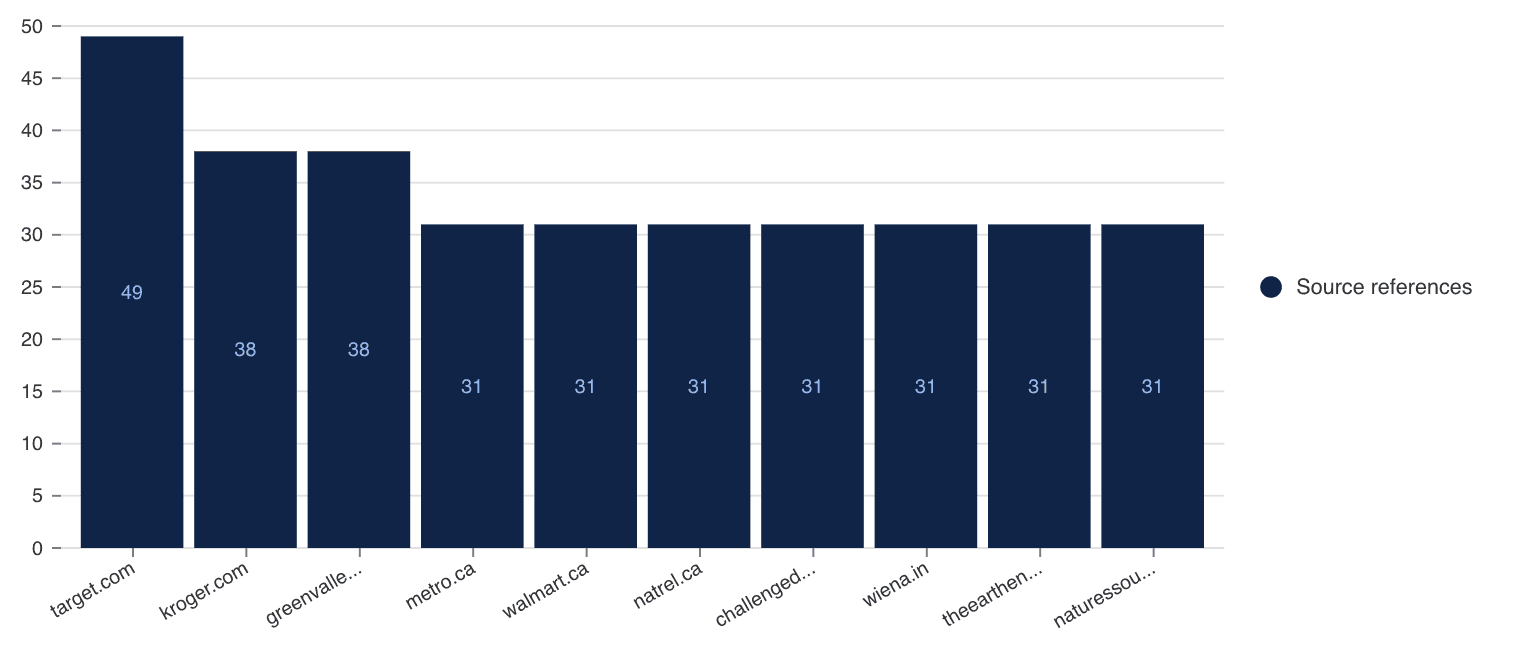
The source environment is strongly commerce-led. Retailers and marketplace pages are shaping many answers, with Target leading and Kroger close behind. Green Valley’s owned website is also highly visible, which is a meaningful advantage: the brand already has owned material that LLMs can draw on.
The risk is that retail listings may define the brand mainly through availability, not through differentiated benefits. Green Valley should use its owned site and earned sources to shift the narrative from where to buy toward why choose Green Valley.
Top influential domains
Top domains by the number of source references appearing across entity mentions.
Source Ecosystem Analysis
The narrative is anchored in three source types:
Retail and marketplace sources such as Target, Kroger, Walmart, Metro, and Ocado. These strengthen purchase availability but rarely build deeper brand preference.
Owned and brand-controlled sources including Green Valley, Natrel, and Challenge Dairy. These are important because they can carry product claims, usage education, and brand positioning in a structured way.
Health and category explainers such as NHS and Healthline, which help define lactose-free products but appear less central than retail sources in this prompt set.
Green Valley’s owned domain is among the top source domains, with 38 references. For PR and SEO, the opportunity is not basic discoverability; it is narrative control. The brand should expand pages that answer high-intent questions directly, then reinforce them with credible earned coverage and retailer content consistency.
Sentiment and Perception Analysis

Sentiment is mostly neutral across the lactose-free landscape. That is not necessarily bad: many answers are functional, listing products or purchase options rather than making evaluative claims. However, neutrality also means few brands are earning distinctive positive language.
Green Valley is neutral in the analyzed responses. The brand is not grouped with negative criticism, but it is also not being praised for taste, digestibility, availability, quality, or trust. Positive language is concentrated around formula-related entities such as Similac Sensitive, Similac, Enfamil, and AlphaLact LF Premium.
Sentiment Drivers and Citations
Positive wording is concentrated in prompts about lactose-free formula. The strongest praise frames products as commonly recommended, true lactose-free, or a strong default choice for babies. That creates clear authority for formula brands, but it does not transfer to Green Valley’s dairy positioning.
No meaningful negative citation theme appears for Green Valley or the wider brand set. The more important issue is a lack of benefit ownership: Green Valley is appearing as an option, not as the answer to a specific consumer concern.
For communications, the priority is to give LLMs stronger language to reuse: taste reassurance, digestive comfort, real-dairy credentials, product availability, and use-case pages for cottage cheese, butter, yogurt, and milk.
How Green Valley Can Stand Out in AI Answers
The questions analyzed point to practical opportunities for Green Valley: help shoppers understand what lactose-free means, compare products, and find out where to buy them. These findings reflect the specific questions tested, rather than every AI answer about lactose-free dairy.
Green Valley’s website already appears as a source. The next step is to make its content more useful to shoppers and give AI tools clearer, well-supported reasons to include the brand in their answers.
Five Steps to Build Stronger Visibility
Answer common shopping questions. Create or improve pages about lactose-free butter, cottage cheese, milk, and yogurt. Give direct answers, explain product benefits, and make buying information easy to find.
Help shoppers compare their options. Publish clear guides explaining how Green Valley products differ from alternatives and which uses they suit. Useful comparisons can help establish the brand’s expertise, though they cannot guarantee a higher position in AI answers.
Explain more than where to buy. Retail listings help shoppers find products, but Green Valley’s content should also explain why someone might choose them. Support information about taste, dairy ingredients, and digestive comfort with appropriate evidence.
Use customer feedback to improve content. Pay attention to recurring questions and comments about taste, trust, availability, and digestion. Use those insights to address gaps in product pages and FAQs.
Build credibility beyond the brand’s website. Share useful, evidence-backed information with food journalists, nutrition writers, and relevant publications. Independent coverage can give shoppers—and AI tools—additional sources for understanding Green Valley’s products.
When people ask AI about lactose-free dairy, products such as butter, milk, and yogurt take center stage - with no single brand dominating the answers analyzed. Green Valley is part of the conversation, but it typically appears later than key competitors and receives neutral mentions rather than clear recommendations.
With its website already a prominent source, the brand has a foundation to build on. The opportunity is to give AI answers clearer reasons to recommend Green Valley, beyond simply telling shoppers where to buy it.
How Green Valley Appears in AI Answers About Lactose-Free Dairy
The lactose-free conversation is fragmented rather than dominated by one brand. Product-led needs, especially butter, milk, and yogurt, create the strongest entry points, while brand mentions are spread across retailers, dairy brands, and formula brands.
Green Valley is visible, but not yet commanding. It appears among the leading brand names and matches Amazon in mention volume, yet its placement is typically later than several competitors. This suggests awareness exists, but authority is not consistently strong enough to make Green Valley a first-answer brand.
Share of mentions by entity type
Share of total entity mentions for the leading entities, with the remaining long tail grouped as other entities.
Brand Prominence and Rank
Lower placement scores indicate earlier appearance in answers. On that basis, the prompt set favors products and use cases before brand leadership: butter, lactose-free milk, cheese, and Similac Sensitive all tend to surface near the top.
For brands, Similac, Epigamia, Good Culture, and Zepto show stronger top-of-answer visibility than Green Valley. Green Valley’s average placement is around 5th, behind the brand norm and well behind Amazon’s roughly 2nd-place position. The implication is clear: Green Valley is present in the answer set, but competitors are more likely to frame the first impression.
This matters for communications because LLM responses often compress consumer choice into a short list. If Green Valley is mentioned later, the brand may be recognized as available but not positioned as the category authority.
Sources Shaping the Narrative
The source environment is strongly commerce-led. Retailers and marketplace pages are shaping many answers, with Target leading and Kroger close behind. Green Valley’s owned website is also highly visible, which is a meaningful advantage: the brand already has owned material that LLMs can draw on.
The risk is that retail listings may define the brand mainly through availability, not through differentiated benefits. Green Valley should use its owned site and earned sources to shift the narrative from where to buy toward why choose Green Valley.
Top influential domains
Top domains by the number of source references appearing across entity mentions.
Source Ecosystem Analysis
The narrative is anchored in three source types:
Retail and marketplace sources such as Target, Kroger, Walmart, Metro, and Ocado. These strengthen purchase availability but rarely build deeper brand preference.
Owned and brand-controlled sources including Green Valley, Natrel, and Challenge Dairy. These are important because they can carry product claims, usage education, and brand positioning in a structured way.
Health and category explainers such as NHS and Healthline, which help define lactose-free products but appear less central than retail sources in this prompt set.
Green Valley’s owned domain is among the top source domains, with 38 references. For PR and SEO, the opportunity is not basic discoverability; it is narrative control. The brand should expand pages that answer high-intent questions directly, then reinforce them with credible earned coverage and retailer content consistency.
Sentiment and Perception Analysis
Sentiment is mostly neutral across the lactose-free landscape. That is not necessarily bad: many answers are functional, listing products or purchase options rather than making evaluative claims. However, neutrality also means few brands are earning distinctive positive language.
Green Valley is neutral in the analyzed responses. The brand is not grouped with negative criticism, but it is also not being praised for taste, digestibility, availability, quality, or trust. Positive language is concentrated around formula-related entities such as Similac Sensitive, Similac, Enfamil, and AlphaLact LF Premium.
Sentiment Drivers and Citations
Positive wording is concentrated in prompts about lactose-free formula. The strongest praise frames products as commonly recommended, true lactose-free, or a strong default choice for babies. That creates clear authority for formula brands, but it does not transfer to Green Valley’s dairy positioning.
No meaningful negative citation theme appears for Green Valley or the wider brand set. The more important issue is a lack of benefit ownership: Green Valley is appearing as an option, not as the answer to a specific consumer concern.
For communications, the priority is to give LLMs stronger language to reuse: taste reassurance, digestive comfort, real-dairy credentials, product availability, and use-case pages for cottage cheese, butter, yogurt, and milk.
How Green Valley Can Stand Out in AI Answers
The questions analyzed point to practical opportunities for Green Valley: help shoppers understand what lactose-free means, compare products, and find out where to buy them. These findings reflect the specific questions tested, rather than every AI answer about lactose-free dairy.
Green Valley’s website already appears as a source. The next step is to make its content more useful to shoppers and give AI tools clearer, well-supported reasons to include the brand in their answers.
Five Steps to Build Stronger Visibility
Answer common shopping questions. Create or improve pages about lactose-free butter, cottage cheese, milk, and yogurt. Give direct answers, explain product benefits, and make buying information easy to find.
Help shoppers compare their options. Publish clear guides explaining how Green Valley products differ from alternatives and which uses they suit. Useful comparisons can help establish the brand’s expertise, though they cannot guarantee a higher position in AI answers.
Explain more than where to buy. Retail listings help shoppers find products, but Green Valley’s content should also explain why someone might choose them. Support information about taste, dairy ingredients, and digestive comfort with appropriate evidence.
Use customer feedback to improve content. Pay attention to recurring questions and comments about taste, trust, availability, and digestion. Use those insights to address gaps in product pages and FAQs.
Build credibility beyond the brand’s website. Share useful, evidence-backed information with food journalists, nutrition writers, and relevant publications. Independent coverage can give shoppers—and AI tools—additional sources for understanding Green Valley’s products.
Milena Ozeki
Senior/Lead Product Manager
Share

