Blog
Guides
Six Business Decisions You Should Make with Search Intelligence
Discover six moments when Trajaan search intelligence helps you validate demand, prioritize markets, and understand brand perception across search and AI.

Matthieu Danielou
Co-founder & CEO

A product launch is approaching. Two markets are competing for the same budget. A campaign has generated attention, but the team still needs to understand whether people are considering the product. Or an AI answer describes your brand using information that is out of date.
These are moments when understanding what people search for, and the answers they encounter, can change a business decision.
Search intelligence helps teams understand what audiences independently investigate: the problems they want to solve, the products they compare, and the concerns they need to resolve. It also examines how AI-generated answers represent brands and which sources shape those answers.
Trajaan brings these signals together to help businesses understand consumer needs, validate demand, and monitor brand perception across search and AI.
Its value becomes especially clear when a consequential decision depends on something your existing data cannot fully explain.
1. Before you commit budget to an assumption about demand
An idea can attract plenty of attention inside your industry while leaving a basic question unanswered: do potential customers actually care?
Before investing in a product, campaign, or category, search intelligence helps you test the assumptions behind the opportunity. You can examine whether people are exploring the need, which benefits interest them, and whether that interest persists over time.
Imagine a product team considering a more sustainable version of an existing product. Search behavior could help it investigate how people weigh sustainability alongside durability, convenience, and price. That evidence can inform both the proposition and the research questions that need further testing.
This matters most when: you are about to commit resources and the business case depends on an untested belief about customer demand.
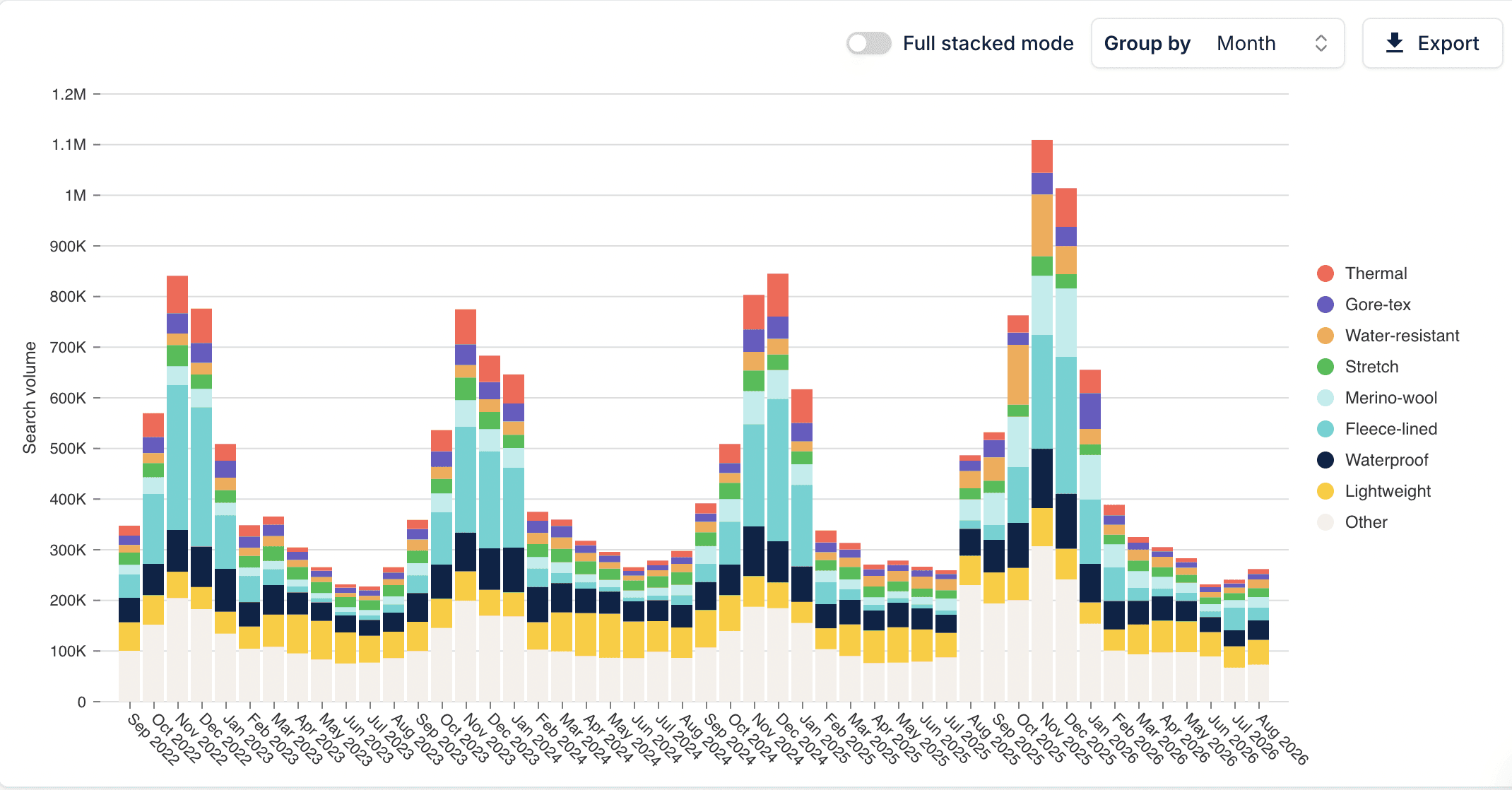
Water-resistant fashion is definitely getting bigger & bigger over years, in the US (Google data)
Search activity is evidence of interest, rather than a guarantee of sales. Its value lies in giving teams a stronger basis for deciding what deserves investment or further validation.
2. When you need to choose where to grow
A global category trend can hide significant differences between markets.
People may search for the same product in different countries while looking for different benefits. One market may show interest in premium features. Another may focus on affordability, availability, or maintenance.
Those differences affect where to launch, which products to prioritize, and what to emphasize in the campaign.
Search intelligence helps teams compare demand across markets and understand the needs behind it. Instead of carrying a broad audience assumption into every region, teams can examine the questions and use cases that matter locally.
For a business planning expansion, that evidence can help narrow the shortlist of markets worth investigating. For an established international brand, it can reveal where positioning or investment needs to change.
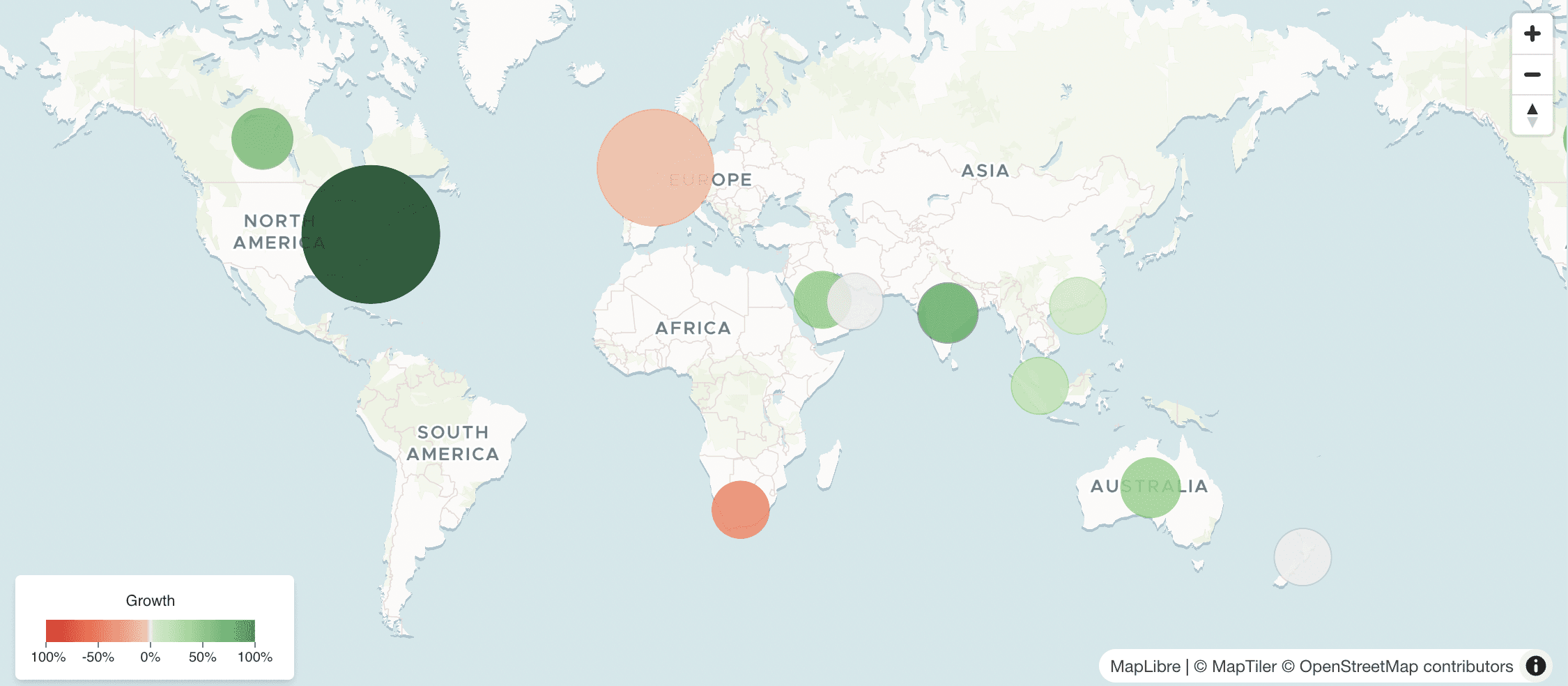
Growth in demand for water-resistant fashion is mainly happening in the US, not in the EU
This matters most when: markets are competing for resources, or a successful strategy in one country is becoming the default for another.
3. When customers’ unanswered questions are slowing decisions
Your messaging may explain the product clearly from the company’s perspective while leaving a buyer’s biggest concern unresolved.
Consider someone researching whether a service is difficult to cancel, whether a product works with something they already own, or whether switching will disrupt their routine. Those questions may never appear in a public social post. They can still influence the purchase decision.
Search intelligence helps surface the questions people ask independently and the language they use to describe their needs. That gives marketing and insights teams a way to identify confusion, missing information, and possible unmet needs.
The response might be a clearer product page, a comparison guide, or a change to the proposition itself. Recurring questions can also give research teams specific hypotheses to explore with customers.
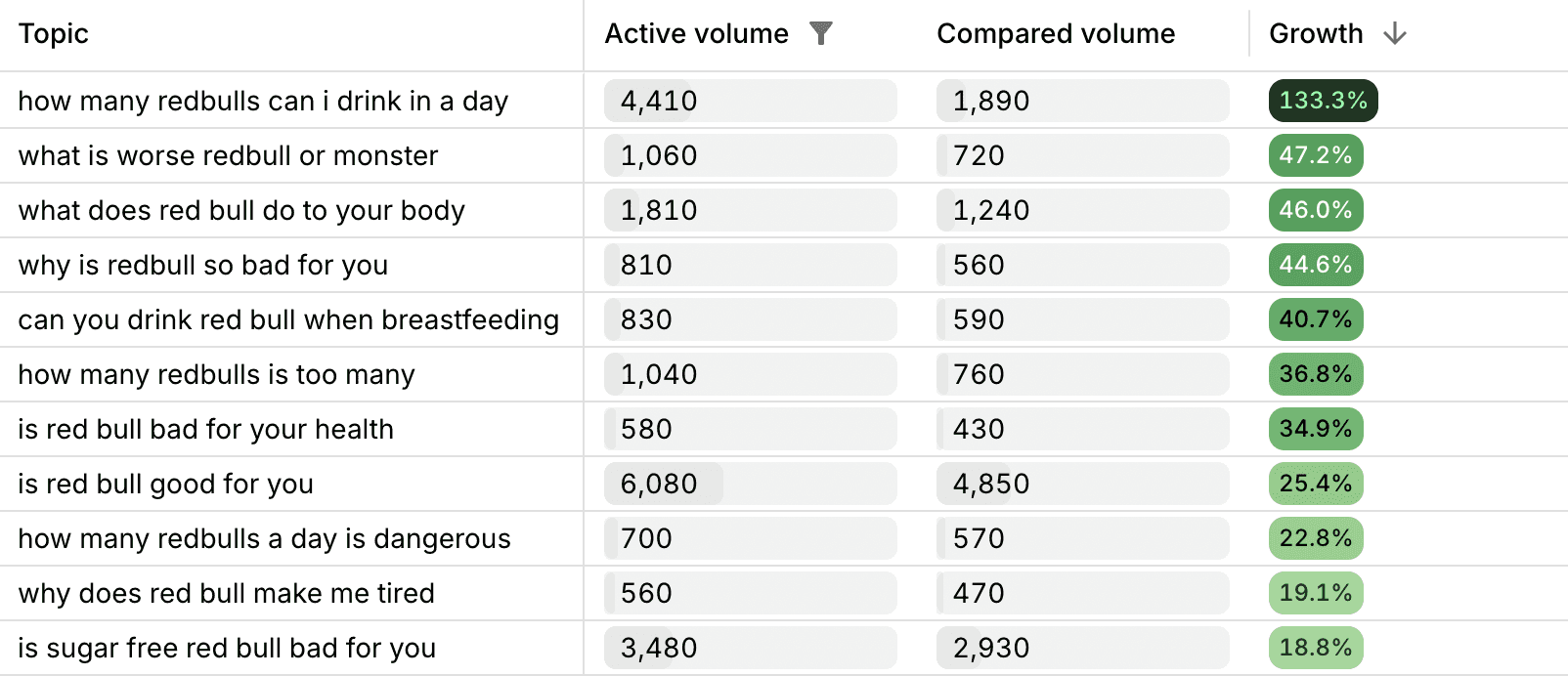
Trending questions in 2026 about Red Bull as an energy drink.
This matters most when: your team needs to understand what buyers are struggling to resolve before they move forward.
4. When reputation concerns begin to change what people investigate
Media coverage tells you which stories are being published. Search behavior adds another perspective: what people want to know about those stories and your brand.
Are they investigating complaints? Looking for reassurance? Asking whether an issue affects a particular product? Comparing alternatives?
These patterns can help communications teams understand which concerns deserve attention and what a useful response needs to address. Monitoring them over time can also reveal whether questions are fading, persisting, or shifting.
A rise in concern-related searches needs context. It can reflect curiosity as well as distrust. Looking at the questions alongside media coverage and public conversation helps teams interpret the signal.
This matters most when: an emerging issue creates uncertainty about what stakeholders are worried about and how communications should respond.
5. When AI answers influence how buyers understand your brand
When a buyer asks an AI platform to explain your product or compare alternatives, the answer may become part of their evaluation.
Being mentioned is only one part of the picture. Teams also need to understand whether the description is accurate, which attributes it emphasizes, and whether important context is missing.
An answer might repeat an outdated limitation, associate the brand with an unresolved concern, or recommend a competitor for a use case your product serves. Each situation creates a different communications or content priority.
Trajaan helps teams monitor those representations and identify the sources influencing them. That intelligence can guide updates to owned content and help prioritize relevant outreach.
This matters most when: buyers encounter AI-generated explanations of your category and you need to understand how those answers frame your brand.
6. When you need to understand what changed after a campaign
After a campaign, teams need to assess whether the audience response matches the objective.
Search intelligence can help examine whether people are investigating the intended product, benefit, or use case. It can also reveal follow-up questions that suggest the campaign left something unclear.
For example, a campaign promoting ease of use might prompt more searches about setup. That gives the team a specific question to investigate: did the campaign encourage consideration, or did it expose a need for better explanation?
For communications teams, tracking search questions and AI narratives can add context to how brand understanding evolves after an initiative.
These changes should sit alongside other campaign evidence. Search movement alone does not establish that a campaign caused the result.
This matters most when: you need evidence about changes in audience interest and understanding to inform the next round of activity.
Start with the decision you need to make
Search intelligence is most useful when the question is specific.
“Should we prioritize this market?” gives the analysis a purpose. So does “Which concern should our launch content address?” or “Are AI answers accurately explaining our product?”
Trajaan helps marketing, communications, insights, and strategy teams connect those questions to evidence from search behavior and AI-generated answers. Alongside research, media intelligence, and social intelligence, it gives teams a fuller view of what audiences need and the information shaping their choices.
Have a launch, market decision, or brand question coming up? Talk to Trajaan about how search intelligence can help you evaluate your next move.
A product launch is approaching. Two markets are competing for the same budget. A campaign has generated attention, but the team still needs to understand whether people are considering the product. Or an AI answer describes your brand using information that is out of date.
These are moments when understanding what people search for, and the answers they encounter, can change a business decision.
Search intelligence helps teams understand what audiences independently investigate: the problems they want to solve, the products they compare, and the concerns they need to resolve. It also examines how AI-generated answers represent brands and which sources shape those answers.
Trajaan brings these signals together to help businesses understand consumer needs, validate demand, and monitor brand perception across search and AI.
Its value becomes especially clear when a consequential decision depends on something your existing data cannot fully explain.
1. Before you commit budget to an assumption about demand
An idea can attract plenty of attention inside your industry while leaving a basic question unanswered: do potential customers actually care?
Before investing in a product, campaign, or category, search intelligence helps you test the assumptions behind the opportunity. You can examine whether people are exploring the need, which benefits interest them, and whether that interest persists over time.
Imagine a product team considering a more sustainable version of an existing product. Search behavior could help it investigate how people weigh sustainability alongside durability, convenience, and price. That evidence can inform both the proposition and the research questions that need further testing.
This matters most when: you are about to commit resources and the business case depends on an untested belief about customer demand.
Water-resistant fashion is definitely getting bigger & bigger over years, in the US (Google data)
Search activity is evidence of interest, rather than a guarantee of sales. Its value lies in giving teams a stronger basis for deciding what deserves investment or further validation.
2. When you need to choose where to grow
A global category trend can hide significant differences between markets.
People may search for the same product in different countries while looking for different benefits. One market may show interest in premium features. Another may focus on affordability, availability, or maintenance.
Those differences affect where to launch, which products to prioritize, and what to emphasize in the campaign.
Search intelligence helps teams compare demand across markets and understand the needs behind it. Instead of carrying a broad audience assumption into every region, teams can examine the questions and use cases that matter locally.
For a business planning expansion, that evidence can help narrow the shortlist of markets worth investigating. For an established international brand, it can reveal where positioning or investment needs to change.
Growth in demand for water-resistant fashion is mainly happening in the US, not in the EU
This matters most when: markets are competing for resources, or a successful strategy in one country is becoming the default for another.
3. When customers’ unanswered questions are slowing decisions
Your messaging may explain the product clearly from the company’s perspective while leaving a buyer’s biggest concern unresolved.
Consider someone researching whether a service is difficult to cancel, whether a product works with something they already own, or whether switching will disrupt their routine. Those questions may never appear in a public social post. They can still influence the purchase decision.
Search intelligence helps surface the questions people ask independently and the language they use to describe their needs. That gives marketing and insights teams a way to identify confusion, missing information, and possible unmet needs.
The response might be a clearer product page, a comparison guide, or a change to the proposition itself. Recurring questions can also give research teams specific hypotheses to explore with customers.
Trending questions in 2026 about Red Bull as an energy drink.
This matters most when: your team needs to understand what buyers are struggling to resolve before they move forward.
4. When reputation concerns begin to change what people investigate
Media coverage tells you which stories are being published. Search behavior adds another perspective: what people want to know about those stories and your brand.
Are they investigating complaints? Looking for reassurance? Asking whether an issue affects a particular product? Comparing alternatives?
These patterns can help communications teams understand which concerns deserve attention and what a useful response needs to address. Monitoring them over time can also reveal whether questions are fading, persisting, or shifting.
A rise in concern-related searches needs context. It can reflect curiosity as well as distrust. Looking at the questions alongside media coverage and public conversation helps teams interpret the signal.
This matters most when: an emerging issue creates uncertainty about what stakeholders are worried about and how communications should respond.
5. When AI answers influence how buyers understand your brand
When a buyer asks an AI platform to explain your product or compare alternatives, the answer may become part of their evaluation.
Being mentioned is only one part of the picture. Teams also need to understand whether the description is accurate, which attributes it emphasizes, and whether important context is missing.
An answer might repeat an outdated limitation, associate the brand with an unresolved concern, or recommend a competitor for a use case your product serves. Each situation creates a different communications or content priority.
Trajaan helps teams monitor those representations and identify the sources influencing them. That intelligence can guide updates to owned content and help prioritize relevant outreach.
This matters most when: buyers encounter AI-generated explanations of your category and you need to understand how those answers frame your brand.
6. When you need to understand what changed after a campaign
After a campaign, teams need to assess whether the audience response matches the objective.
Search intelligence can help examine whether people are investigating the intended product, benefit, or use case. It can also reveal follow-up questions that suggest the campaign left something unclear.
For example, a campaign promoting ease of use might prompt more searches about setup. That gives the team a specific question to investigate: did the campaign encourage consideration, or did it expose a need for better explanation?
For communications teams, tracking search questions and AI narratives can add context to how brand understanding evolves after an initiative.
These changes should sit alongside other campaign evidence. Search movement alone does not establish that a campaign caused the result.
This matters most when: you need evidence about changes in audience interest and understanding to inform the next round of activity.
Start with the decision you need to make
Search intelligence is most useful when the question is specific.
“Should we prioritize this market?” gives the analysis a purpose. So does “Which concern should our launch content address?” or “Are AI answers accurately explaining our product?”
Trajaan helps marketing, communications, insights, and strategy teams connect those questions to evidence from search behavior and AI-generated answers. Alongside research, media intelligence, and social intelligence, it gives teams a fuller view of what audiences need and the information shaping their choices.
Have a launch, market decision, or brand question coming up? Talk to Trajaan about how search intelligence can help you evaluate your next move.
Matthieu Danielou
Co-founder & CEO
Share


