Blog
Reports
Chagas Search Trends 2025: What Healthcare Brands Should Do In South America

Matthieu Danielou
Co-founder & CEO

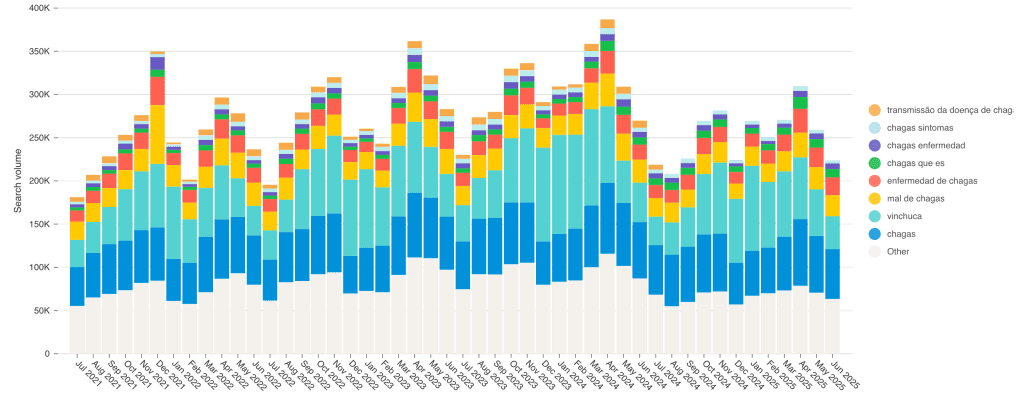
A four-year view of search behavior shows a clear turn toward “what is it?” explainers on Chagas disease, while vector vocabulary is sharply local and treatment interest clusters around molecules, not masterbrands. June’s leaders are “chagas” (57.5k) and “vinchuca” (38.3k); definitional queries accelerate, symptom queries soften, and low-base risers flag gaps in transmission, vaccines, and PT-BR treatment how-tos.
Findings are drawn from the provided Trajaan datasets (setup, share-of-volume, local-affinity), spanning Jul 2021–Jun 2025 with a spotlight on June 2025.
June 2025 Is Led by Core Disease and Vector Terms as Definitional Intent Climbs
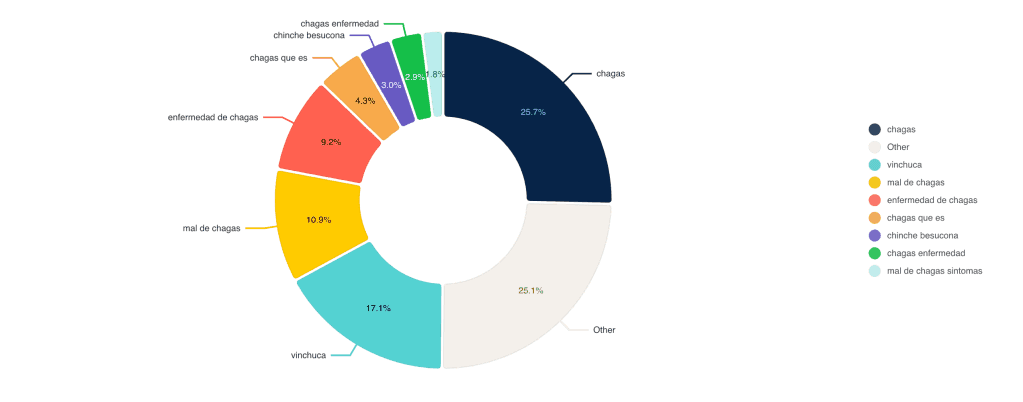
June’s search leaders are unambiguous: “chagas” (57.5k) and “vinchuca” (38.3k) top the list, followed by “mal de chagas” (24.3k) and “enfermedad de chagas” (20.5k). Within the leaders, explainers grow fastest - “chagas que es” and “chagas enfermedad” post strong 3-month gains -while symptoms terms are flat to soft. Net: users are earlier in the journey, looking for what it is before what to do.
Fast-Rising, Low-Base Queries Expose Gaps in Transmission, Vaccines, and PT-BR Treatment
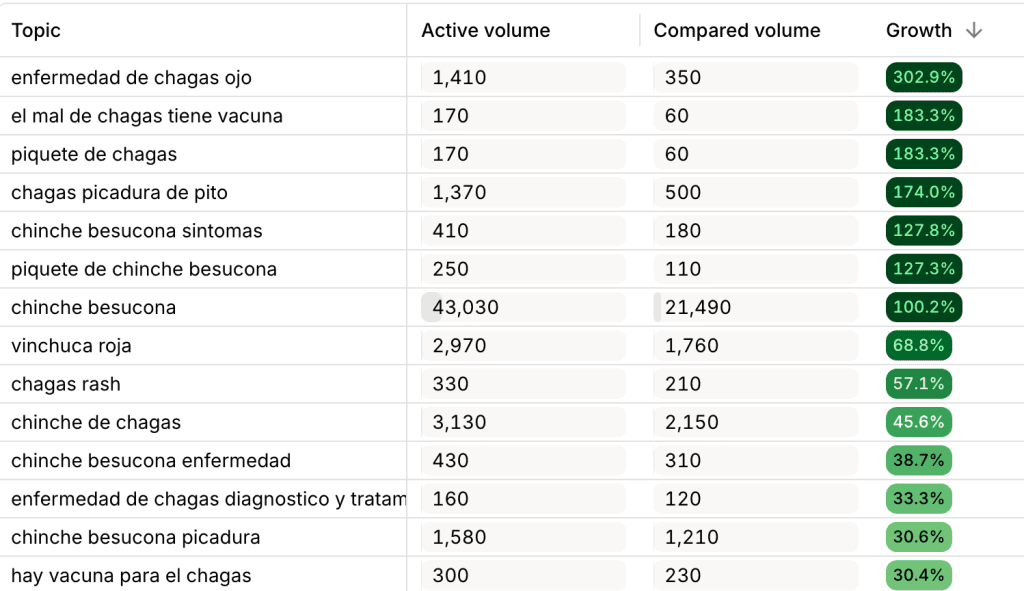
The strongest weak signals cluster around “how it spreads,” “is there a vaccine?” and “how to cure”, especially in Portuguese. “trypanosoma cruzi transmisión” is up sharply off a tiny base; vaccine questions resurface with intermittent spikes; and “como curar a doença de chagas” grows in PT-BR. Safety concerns around nifurtimox (e.g., side effects) also trend. These are content gaps waiting to be filled with clear, trustworthy guidance.
Vocabulary and Intent Are Local: Argentina Says “Vinchuca,” Brazil Speaks Symptoms and Treatment
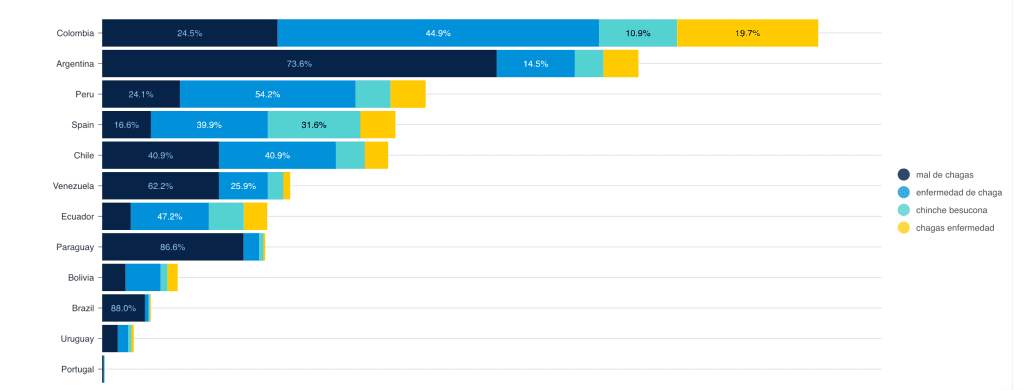
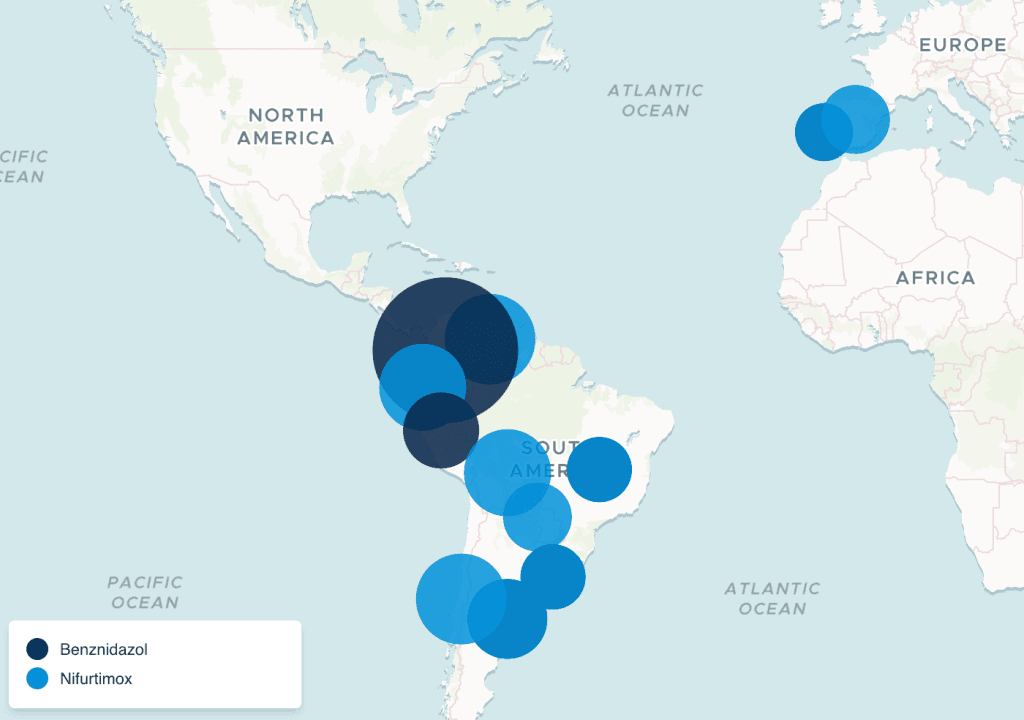
Geography dictates language and need. Argentina and the Southern Cone center the vector: “vinchuca,” “picadas de vinchuca,” “mal de chagas.” Brazil leans patient-centric with Portuguese symptoms and treatment phrasing (e.g., “sintomas da doença de Chagas,” “transmissão,” “como tratar”). Colombia indexes on disease-term searches, while Spain surfaces “chinche besucona.” A single generic page won’t rank everywhere, local lexicon wins.
Searchers ask about molecules and practicalities (price, dose, side effects) rather than companies. Nifurtimox holds the most active interest, often benchmarked against benznidazole; queries like price, dosis/presentación, and contraindicaciones are common. To capture this intent, brands must own molecule-level resource hubs and answer the hard questions comprehensively.
Publishers ranking now typically nail the explainers (What is Chagas? What is the vector?) and cover molecules with useful, plain-language detail. The open lane is clear: transmission explainers that earn snippets, vaccine Q&As that set expectations and redirect to prevention, and Portuguese care pathways that speak directly to Brazilian intent.
A Five-Step Playbook to Lead: Localized Pillars, Gap-Filling Modules, Molecule Hubs, a Brazil Wedge, and Fast Refresh
Build a multilingual pillar + local hubs. Create a central “What is Chagas?” page with visuals and prevention checklists; ship country pages using local synonyms (vinchuca, chinche besucona, PT-BR phrasing).
Close the “how it spreads” and “vaccine” gaps. Add Transmission modules to every high-traffic page and maintain a Vaccine Status sidebar that explains reality and alternative protections.
Own treatment intent at molecule level. Launch Nifurtimox and Benznidazole centers with dosage ranges, contraindications, monitoring, and cost/availability by country.
Win Brazil with PT-BR care navigation. Publish PT-BR guides (“como tratar/curar,” “onde testar,” “quanto tempo dura o tratamento”) and link to clinic finders and next-step CTAs.
Operate on a newsroom cadence. Track a fast-riser watchlist monthly; refresh pages when any term jumps >+50% QoQ; update molecule FAQs when price/availability queries spike.
The Takeaway for Teams: Explain Early, Localize Language, Answer Hard Questions, and Link to Care
Prioritize explainers (they’re rising), mirror local vocabulary (that’s how you rank), and meet treatment intent with molecule-level depth. Every page should push users toward testing and treatment pathways with clear, credible next steps.
A four-year view of search behavior shows a clear turn toward “what is it?” explainers on Chagas disease, while vector vocabulary is sharply local and treatment interest clusters around molecules, not masterbrands. June’s leaders are “chagas” (57.5k) and “vinchuca” (38.3k); definitional queries accelerate, symptom queries soften, and low-base risers flag gaps in transmission, vaccines, and PT-BR treatment how-tos.
Findings are drawn from the provided Trajaan datasets (setup, share-of-volume, local-affinity), spanning Jul 2021–Jun 2025 with a spotlight on June 2025.
June 2025 Is Led by Core Disease and Vector Terms as Definitional Intent Climbs
June’s search leaders are unambiguous: “chagas” (57.5k) and “vinchuca” (38.3k) top the list, followed by “mal de chagas” (24.3k) and “enfermedad de chagas” (20.5k). Within the leaders, explainers grow fastest - “chagas que es” and “chagas enfermedad” post strong 3-month gains -while symptoms terms are flat to soft. Net: users are earlier in the journey, looking for what it is before what to do.
Fast-Rising, Low-Base Queries Expose Gaps in Transmission, Vaccines, and PT-BR Treatment
The strongest weak signals cluster around “how it spreads,” “is there a vaccine?” and “how to cure”, especially in Portuguese. “trypanosoma cruzi transmisión” is up sharply off a tiny base; vaccine questions resurface with intermittent spikes; and “como curar a doença de chagas” grows in PT-BR. Safety concerns around nifurtimox (e.g., side effects) also trend. These are content gaps waiting to be filled with clear, trustworthy guidance.
Vocabulary and Intent Are Local: Argentina Says “Vinchuca,” Brazil Speaks Symptoms and Treatment
Geography dictates language and need. Argentina and the Southern Cone center the vector: “vinchuca,” “picadas de vinchuca,” “mal de chagas.” Brazil leans patient-centric with Portuguese symptoms and treatment phrasing (e.g., “sintomas da doença de Chagas,” “transmissão,” “como tratar”). Colombia indexes on disease-term searches, while Spain surfaces “chinche besucona.” A single generic page won’t rank everywhere, local lexicon wins.
Searchers ask about molecules and practicalities (price, dose, side effects) rather than companies. Nifurtimox holds the most active interest, often benchmarked against benznidazole; queries like price, dosis/presentación, and contraindicaciones are common. To capture this intent, brands must own molecule-level resource hubs and answer the hard questions comprehensively.
Publishers ranking now typically nail the explainers (What is Chagas? What is the vector?) and cover molecules with useful, plain-language detail. The open lane is clear: transmission explainers that earn snippets, vaccine Q&As that set expectations and redirect to prevention, and Portuguese care pathways that speak directly to Brazilian intent.
A Five-Step Playbook to Lead: Localized Pillars, Gap-Filling Modules, Molecule Hubs, a Brazil Wedge, and Fast Refresh
Build a multilingual pillar + local hubs. Create a central “What is Chagas?” page with visuals and prevention checklists; ship country pages using local synonyms (vinchuca, chinche besucona, PT-BR phrasing).
Close the “how it spreads” and “vaccine” gaps. Add Transmission modules to every high-traffic page and maintain a Vaccine Status sidebar that explains reality and alternative protections.
Own treatment intent at molecule level. Launch Nifurtimox and Benznidazole centers with dosage ranges, contraindications, monitoring, and cost/availability by country.
Win Brazil with PT-BR care navigation. Publish PT-BR guides (“como tratar/curar,” “onde testar,” “quanto tempo dura o tratamento”) and link to clinic finders and next-step CTAs.
Operate on a newsroom cadence. Track a fast-riser watchlist monthly; refresh pages when any term jumps >+50% QoQ; update molecule FAQs when price/availability queries spike.
The Takeaway for Teams: Explain Early, Localize Language, Answer Hard Questions, and Link to Care
Prioritize explainers (they’re rising), mirror local vocabulary (that’s how you rank), and meet treatment intent with molecule-level depth. Every page should push users toward testing and treatment pathways with clear, credible next steps.
Matthieu Danielou
Co-founder & CEO
Share


