Blog
Guides
Beyond Google: How to Win Visibility and Trust in the Age of AI Search
For 20 years, “search strategy” basically meant “Google strategy.” That era is over. Google is still the biggest gateway to information, but it’s no longer the only one that matters. Consumers now discover brands through a mix of classic search engines, retail search, social search, and (increasingly) LLM-based experiences that answer instead of link. If you’re serious about visibility and reputation in 2026, you need to track more than Google… while doubling down on Google at the same time.

Laury Tesio
Senior Product Manager

Why you must care about more than Google
For a long time, “search strategy” meant “Google strategy.”
In 2026, that’s no longer enough, not because Google is dead, but because discovery is now multi-surface: classic search, retail search, social search, and AI answer engines all shape what people see, trust, and choose.
Recent studies (see screenshot) make that shift measurable, and they also show why the new game is not “SEO vs AI,” but “SEO + AI + everything around them.”
Google dominates… but the “rest of search” is not zero
The SparkToro/SEMrush analysis in the screenshot (Q4 2025, USA desktop, “share of search across 41 major sites”) shows two important truths at once:
Google remains the largest surface (≈ 73.7% in the chart).
On mobile, the picture is even more fragmented, as users increasingly go directly to their favorite apps instead of traditional search engines.
But the remaining share is not marginal, it’s spread across platforms that map to different intents:
Amazon ≈ 7.83% (shopping intent)
Bing ≈ 4.3%
YouTube ≈ 3.65% (discovery / inspiration)
ChatGPT ≈ 2.86% (answer intent)
Plus, others like DuckDuckGo (≈ 1.26%), eBay (≈ 1.06%), Yahoo (≈ 0.92%) and more.
What this means: even if you “win on Google,” you can still lose meaningful visibility in the places where people shop, discover, or get answers.
Search is fragmenting by intent: info vs shopping vs inspiration
People don’t use the same place to answer every question anymore:
Shopping intent often starts on marketplaces (Amazon and other retailer search ecosystems).
Inspiration intent frequently starts on social / visual discovery.
Answer intent increasingly happens inside AI experiences (LLMs or AI-first search layers).
So if you only measure Google, you’re measuring one slice of how discovery happens.
LLMs are becoming a discovery layer (but they don’t reward the same things as SEO)
One of the most striking facts in the screenshot comes from the Ahrefs AI Overview citations study:
37.9% of cited pages were in the Top 10 results
31.2% ranked 11–100
and 31.0% of cited pages weren’t even in the Top 100
In other words: SEO ≠ GEO (Generative Engine Optimization).
A page can be invisible in the top rankings and still become highly citable in AI answers, and the reverse is also true.
Why it matters: AI visibility isn’t just “rank.” It’s:
being selected
being cited
how you’re summarized
which alternatives the AI recommends next
So if you only measure Google rankings, you may miss where AI is building preferences.
That’s not a niche behavior anymore; it’s a mainstream habit: people ask, compare, decide, and shortlist brands inside these tools.
The “AI visibility” problem: your page can rank… and still be invisible to AI
This is exactly why Adobe launched a Chrome extension to evaluate whether a webpage is actually readable/citable by AI systems. Their point is blunt: a site can perform in traditional SEO and still be “invisible” to AI if key content isn’t machine-readable.
If LLMs and AI search layers become a primary interface, visibility won’t be only about rankings, it will be about:
being selected
being cited
how you’re summarized
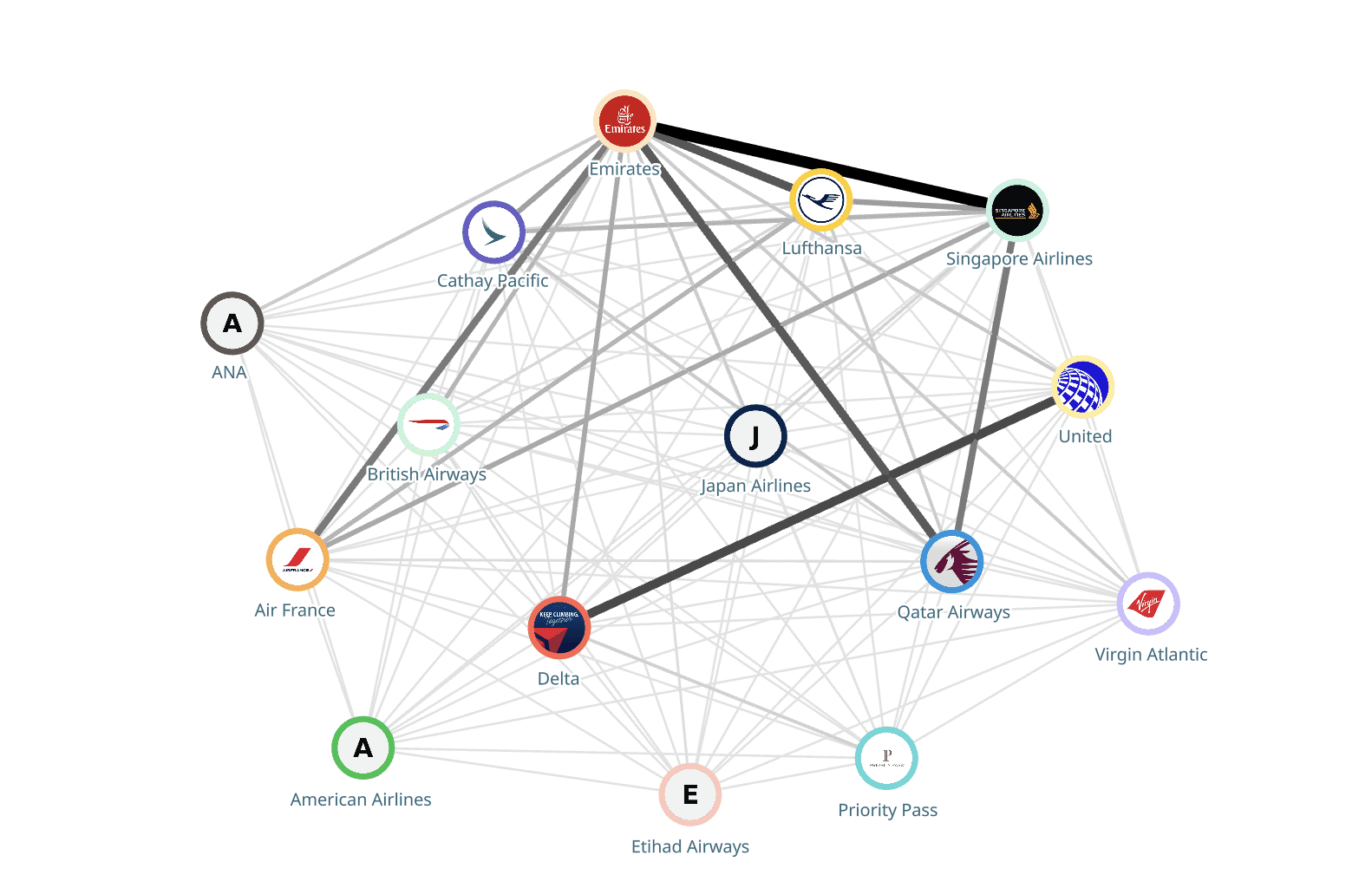
which competitors get recommended next to you
Why you still absolutely must care about Google
Some people overreact and declare “Google is dead.” The data and Google’s own roadmap say the opposite.
Google is still the biggest search surface in the world
Google is still the dominant search engine globally (≈90% share worldwide), though its share is lower in specific contexts like US desktop (~70% in the dataset above).
That’s not declining, that’s still massive scale.
Google isn’t just “Gemini”
When people say “AI is replacing Google,” they often imagine a standalone chatbot. But Google’s strategy is AI inside Search, not Search replaced by AI.
Today, Google’s AI search stack includes:
AI Overviews: AI-generated summaries directly in results, designed to help users “ask new kinds of questions” and explore links. Google announced a major expansion: AI Overviews are available in 200+ countries/territories and 40+ languages.
Google also stated that in major markets like the US and India, AI Overviews are driving 10%+ increase in usage for the types of queries where they appear.
AI Mode: a dedicated generative search experience within Google Search, positioned for deeper Q&A, follow-ups, and research-style exploration. Google explicitly frames AI Mode as “a new way to search,” with “helpful web links,” and describes deeper features like “Deep Search.”
Important clarification: AI systems (like ChatGPT) do not simply “replace” search; they rely on and interact with the broader web ecosystem, which Google still heavily shapes.
Bottom line: Google matters more than ever, because it’s evolving into a hybrid of search + answers.
Why this makes Trajaan valuable right now
The discovery stack is becoming multi-surface:
classic search engines still drive massive volume
social/retail search shape demand and conversion
LLMs increasingly shape narratives, recommendations, and brand associations
The problem is that most teams still monitor these worlds in separate tools (or not at all). That creates blind spots, especially when leadership asks:
“Where do we lose visibility, and why?”
Trajaan is built for multi-source Search Intelligence
Trajaan’s platform is designed to detect and analyze trends across multiple search environments, not just one engine. It offers “comprehensive detection of search trends, across multiple search engines” and an “unmatched search data coverage” approach spanning many connectors.
This is why it’s especially relevant in 2026: you need one place to compare signals across surfaces, countries, and intents.
What Trajaan helps you uncover (even before LLM volumes catch up)
It’s true that LLM “search volumes” aren’t as mature or standardized as classic keyword volumes yet (the ecosystem is still evolving). But visibility and narrative risk in AI outputs are already very real, and will accelerate as AI becomes a default interface inside products citations why a platform that combines classic search intelligence + GenAI monitoring is the pragmatic move now.
Here’s how Trajaan supports that strategy:
Trajaan focuses on the full consumer journey, not just rankings
Search is no longer one moment (“type keyword → click result”). It’s a journey across touchpoints:
Discovery: People ask questions in classic search and GenAI tools.
Understanding: They consume AI summaries that shape perceptions before they ever visit your site.
Consideration: They compare brands inside AI answers (often without clicking out).
Decision: They validate on Google, communities, reviews, social, retail, and media.
Trajaan is designed to measure that journey as a single reality: how people discover, understand, and trust brands, across search engines and GenAI surfaces.
Why this matters now: GenAI has become a new kind of influencer
Three shifts are changing the game:
GenAI platforms are becoming search engines: they are now shaping how people discover and understand brands.
Narratives are written by algorithms trained in media, web content, and cultural signals, signals that brands don’t fully control.
The new challenge is no longer “are we visible on Google?”
It’s “are we present, and trusted, in AI answers?”
In practice, AI can summarize your category, describe your brand, compare you to competitors, and recommend alternatives, often before a user ever reaches your website.
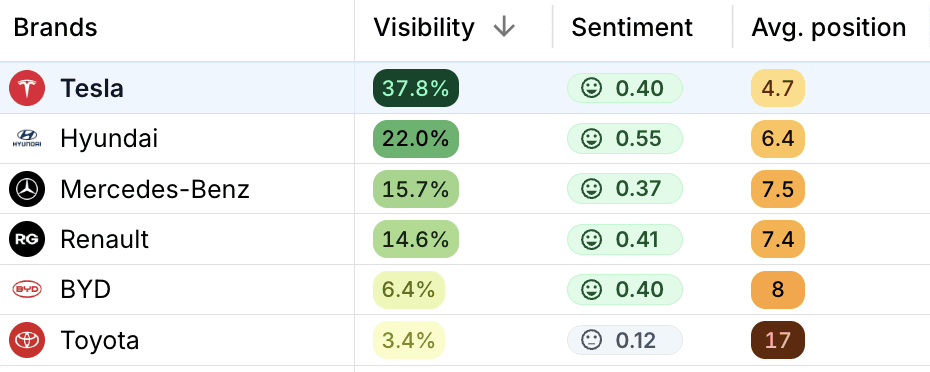
Trajaan’s goal: become the intelligence layer for “how GenAI talks about your brand”
Trajaan helps communication and brand leaders act on this new reality through three core capabilities:
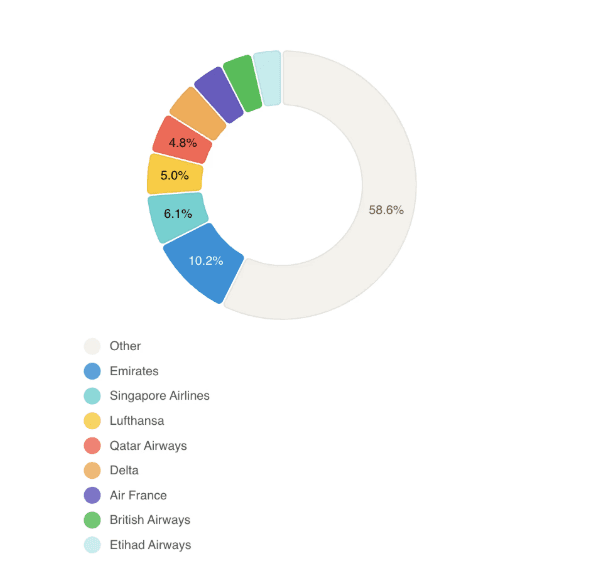
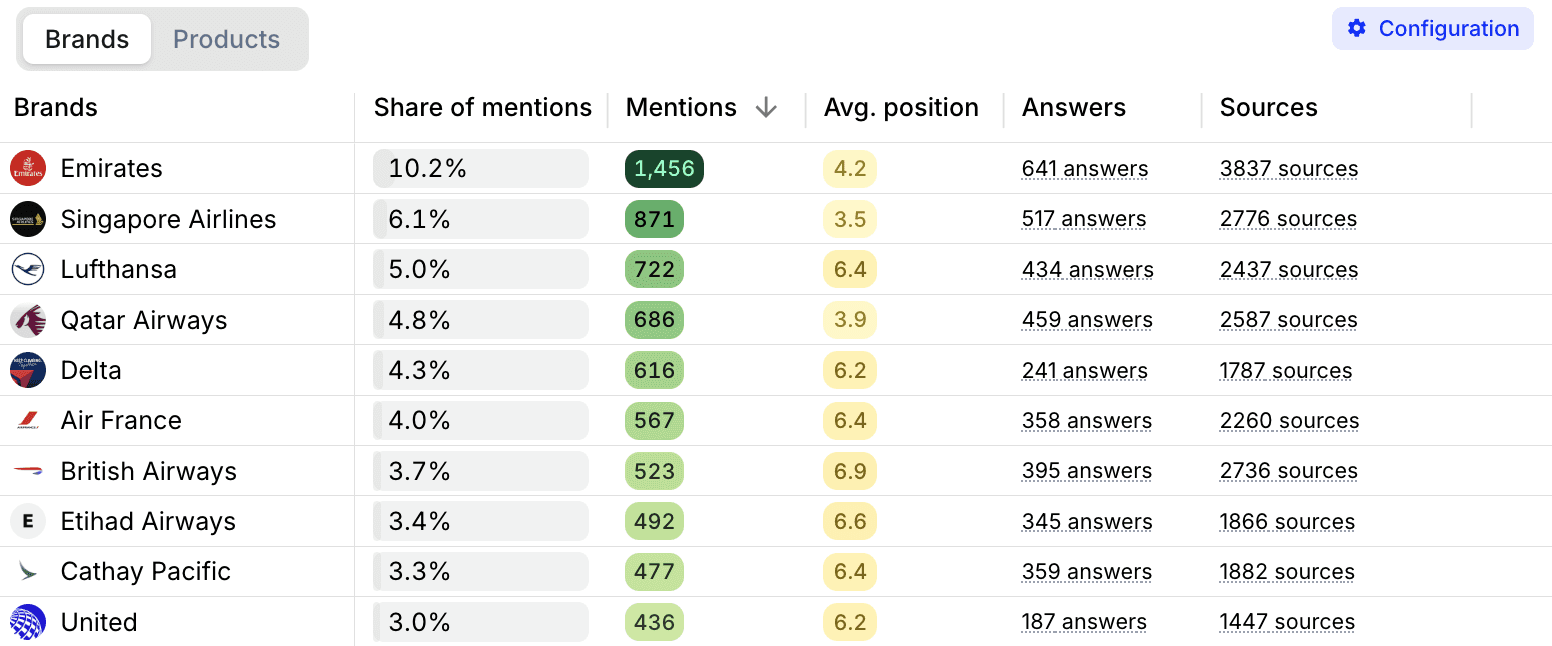
Monitor how LLMs cite your brand and competitors, at scale, worldwide
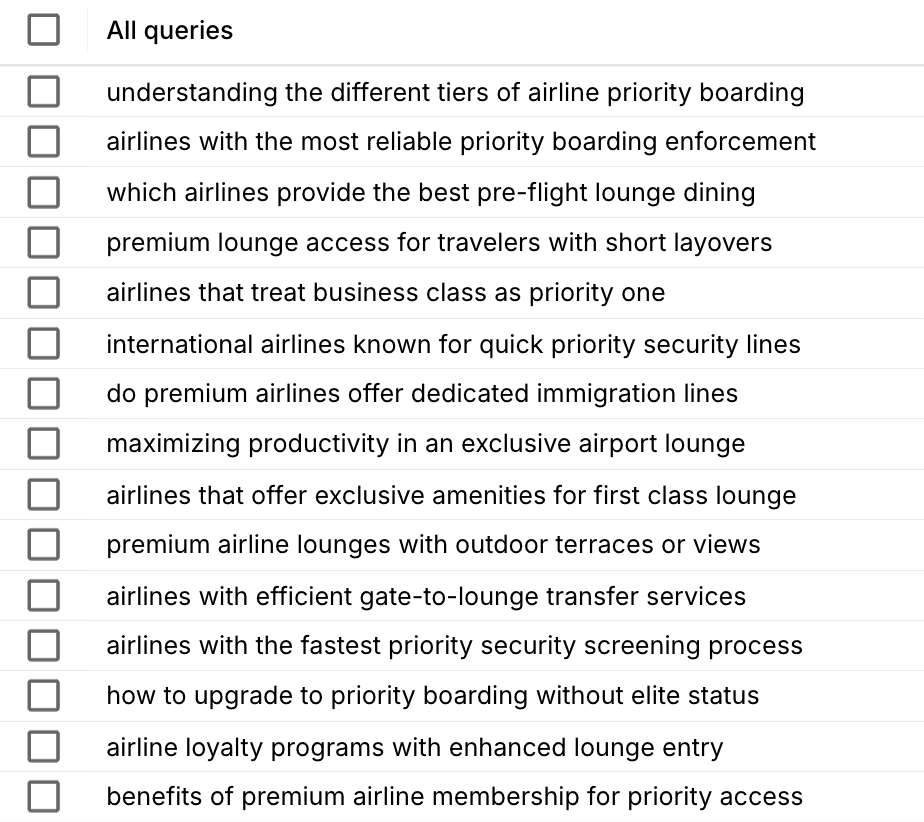
Not a few manual prompts. Trajaan operationalizes this by running thousands of prompts across markets, topics, and languages, so you can see:
when you are (or aren’t) mentioned
how you are positioned vs competitors
which sources and narratives appear repeatedly
Get alerted when narratives turn negative (or risky)
Because perception can shift fast in AI-generated answers, Trajaan helps you detect:
negative mentions and emerging concerns
recurring harmful framings
early signs of reputational drift
…and provides an AI sentiment summary (themes, key terms, frequency) so teams can react with clarity, not panic.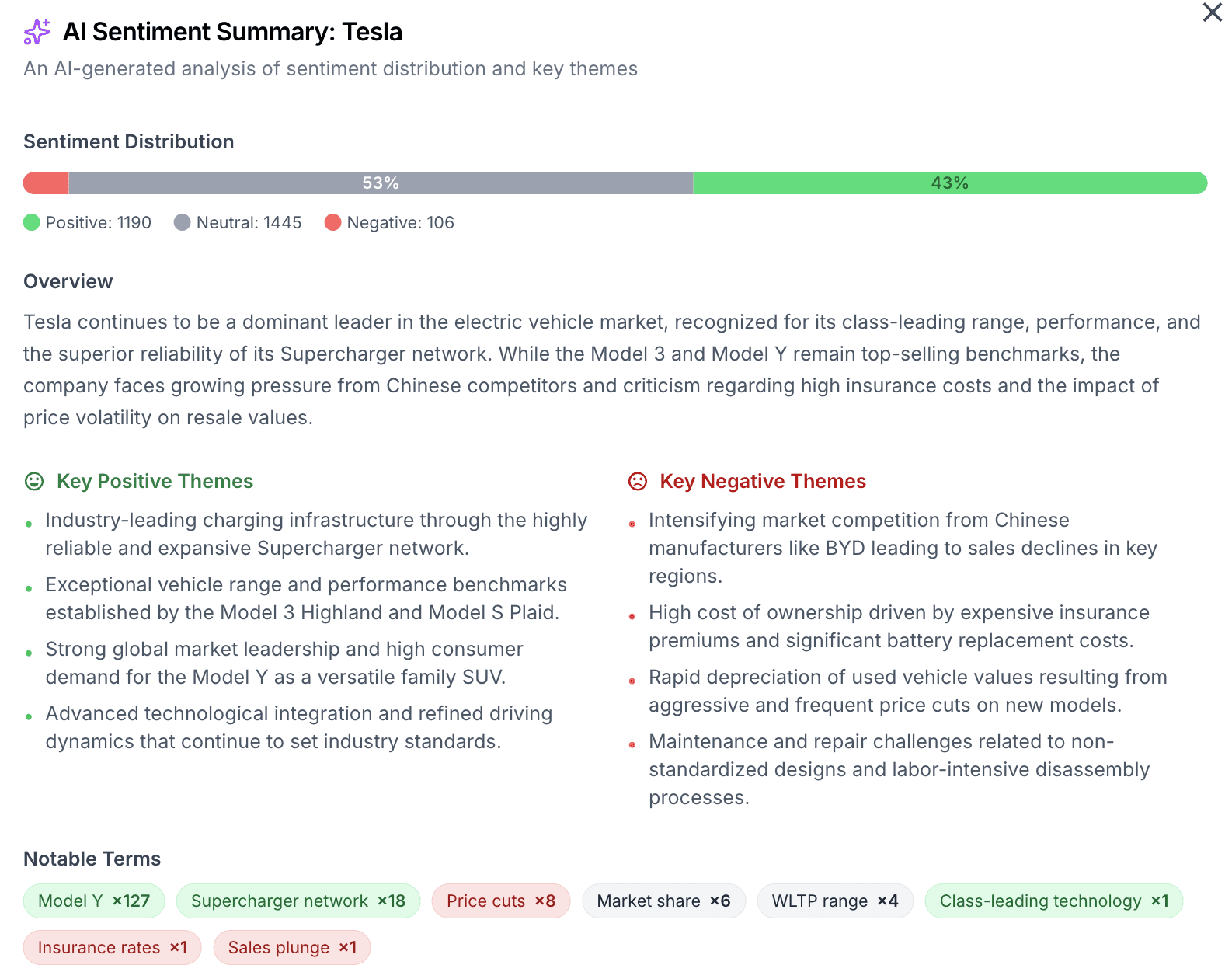
Get recommendations on where to influence, and how
When AI outputs are shaped by external signals (media, social, communities, knowledge sources), the question becomes: where should we act?
Trajaan supports this by identifying:
which channels are driving narratives (media, social, expert content, communities)
where you have influence opportunities (direct brand content vs earned/partner content)
how to coordinate with social & media intelligence platforms to amplify the right signals
The data gap: LLMs don’t share intent data (yet)
Classic search gives you demand signals: keywords, volumes, FAQs, rising queries.
But LLMs generally don’t provide standardized “intent data” like “most searched prompts” or query volumes across platforms.
That’s why the best approach right now is hybrid:
Start leveraging classic search data (Google FAQs, search volumes, “People also ask”) to understand what people want at scale.
Combine it with GenAI monitoring to understand how AI answers those needs today, and how your brand appears in those answers.
So, the best approach is hybrid:
Use search data to understand what people ask
Use GenAI monitoring to understand what AI is saying and citing
And so what? What this means for your business
If you track brand visibility and reputation, Trajaan helps you move from “reporting” to “impact”:
For brand and comms leaders
Protect trust at the source: catch negative or misleading narratives early, before they spread.
Measure reputation inside AI answers: not just sentiment on social, but sentiment inside the new “answer layer.”
Align PR, social, SEO, and content around the same topic priorities and narrative gaps.
For marketing and growth teams
Find demand + narrative gaps: where people ask a question, but AI answers don’t include you (yet).
Improve competitive positioning: see who gets recommended next to you and why.
Prioritize content that changes outcomes: build content that satisfies both human intent (search) and machine readability (AI).
For executives
One dashboard for multi-surface visibility: search is fragmenting; Trajaan keeps leadership aligned on one view of reality.
Earlier risk detection: brand risk increasingly appears first as “how AI frames you,” not as a press headline.
Clear levers for influence: not “AI is random,” but “these sources and channels are shaping the narrative.”
The takeaway: Search is now a multi-surface game
Look beyond Google because discovery and influence now happen across engines, platforms, and AI answer experiences.
Still invest in Google because it remains the biggest search surface and is evolving with AI layers.
Use Trajaan because winning now requires multi-source search intelligence: demand signals (classic search) + narrative control (GenAI visibility, citations, sentiment, alerts, and influence recommendations).
In the age of AI search, the brands that win won’t be the ones who rank the most, they’ll be the ones who are consistently understood, trusted, and recommended everywhere people get.
Why you must care about more than Google
For a long time, “search strategy” meant “Google strategy.”
In 2026, that’s no longer enough, not because Google is dead, but because discovery is now multi-surface: classic search, retail search, social search, and AI answer engines all shape what people see, trust, and choose.
Recent studies (see screenshot) make that shift measurable, and they also show why the new game is not “SEO vs AI,” but “SEO + AI + everything around them.”
Google dominates… but the “rest of search” is not zero
The SparkToro/SEMrush analysis in the screenshot (Q4 2025, USA desktop, “share of search across 41 major sites”) shows two important truths at once:
Google remains the largest surface (≈ 73.7% in the chart).
On mobile, the picture is even more fragmented, as users increasingly go directly to their favorite apps instead of traditional search engines.
But the remaining share is not marginal, it’s spread across platforms that map to different intents:
Amazon ≈ 7.83% (shopping intent)
Bing ≈ 4.3%
YouTube ≈ 3.65% (discovery / inspiration)
ChatGPT ≈ 2.86% (answer intent)
Plus, others like DuckDuckGo (≈ 1.26%), eBay (≈ 1.06%), Yahoo (≈ 0.92%) and more.
What this means: even if you “win on Google,” you can still lose meaningful visibility in the places where people shop, discover, or get answers.
Search is fragmenting by intent: info vs shopping vs inspiration
People don’t use the same place to answer every question anymore:
Shopping intent often starts on marketplaces (Amazon and other retailer search ecosystems).
Inspiration intent frequently starts on social / visual discovery.
Answer intent increasingly happens inside AI experiences (LLMs or AI-first search layers).
So if you only measure Google, you’re measuring one slice of how discovery happens.
LLMs are becoming a discovery layer (but they don’t reward the same things as SEO)
One of the most striking facts in the screenshot comes from the Ahrefs AI Overview citations study:
37.9% of cited pages were in the Top 10 results
31.2% ranked 11–100
and 31.0% of cited pages weren’t even in the Top 100
In other words: SEO ≠ GEO (Generative Engine Optimization).
A page can be invisible in the top rankings and still become highly citable in AI answers, and the reverse is also true.
Why it matters: AI visibility isn’t just “rank.” It’s:
being selected
being cited
how you’re summarized
which alternatives the AI recommends next
So if you only measure Google rankings, you may miss where AI is building preferences.
That’s not a niche behavior anymore; it’s a mainstream habit: people ask, compare, decide, and shortlist brands inside these tools.
The “AI visibility” problem: your page can rank… and still be invisible to AI
This is exactly why Adobe launched a Chrome extension to evaluate whether a webpage is actually readable/citable by AI systems. Their point is blunt: a site can perform in traditional SEO and still be “invisible” to AI if key content isn’t machine-readable.
If LLMs and AI search layers become a primary interface, visibility won’t be only about rankings, it will be about:
being selected
being cited
how you’re summarized
which competitors get recommended next to you
Why you still absolutely must care about Google
Some people overreact and declare “Google is dead.” The data and Google’s own roadmap say the opposite.
Google is still the biggest search surface in the world
Google is still the dominant search engine globally (≈90% share worldwide), though its share is lower in specific contexts like US desktop (~70% in the dataset above).
That’s not declining, that’s still massive scale.
Google isn’t just “Gemini”
When people say “AI is replacing Google,” they often imagine a standalone chatbot. But Google’s strategy is AI inside Search, not Search replaced by AI.
Today, Google’s AI search stack includes:
AI Overviews: AI-generated summaries directly in results, designed to help users “ask new kinds of questions” and explore links. Google announced a major expansion: AI Overviews are available in 200+ countries/territories and 40+ languages.
Google also stated that in major markets like the US and India, AI Overviews are driving 10%+ increase in usage for the types of queries where they appear.
AI Mode: a dedicated generative search experience within Google Search, positioned for deeper Q&A, follow-ups, and research-style exploration. Google explicitly frames AI Mode as “a new way to search,” with “helpful web links,” and describes deeper features like “Deep Search.”
Important clarification: AI systems (like ChatGPT) do not simply “replace” search; they rely on and interact with the broader web ecosystem, which Google still heavily shapes.
Bottom line: Google matters more than ever, because it’s evolving into a hybrid of search + answers.
Why this makes Trajaan valuable right now
The discovery stack is becoming multi-surface:
classic search engines still drive massive volume
social/retail search shape demand and conversion
LLMs increasingly shape narratives, recommendations, and brand associations
The problem is that most teams still monitor these worlds in separate tools (or not at all). That creates blind spots, especially when leadership asks:
“Where do we lose visibility, and why?”
Trajaan is built for multi-source Search Intelligence
Trajaan’s platform is designed to detect and analyze trends across multiple search environments, not just one engine. It offers “comprehensive detection of search trends, across multiple search engines” and an “unmatched search data coverage” approach spanning many connectors.
This is why it’s especially relevant in 2026: you need one place to compare signals across surfaces, countries, and intents.
What Trajaan helps you uncover (even before LLM volumes catch up)
It’s true that LLM “search volumes” aren’t as mature or standardized as classic keyword volumes yet (the ecosystem is still evolving). But visibility and narrative risk in AI outputs are already very real, and will accelerate as AI becomes a default interface inside products citations why a platform that combines classic search intelligence + GenAI monitoring is the pragmatic move now.
Here’s how Trajaan supports that strategy:
Trajaan focuses on the full consumer journey, not just rankings
Search is no longer one moment (“type keyword → click result”). It’s a journey across touchpoints:
Discovery: People ask questions in classic search and GenAI tools.
Understanding: They consume AI summaries that shape perceptions before they ever visit your site.
Consideration: They compare brands inside AI answers (often without clicking out).
Decision: They validate on Google, communities, reviews, social, retail, and media.
Trajaan is designed to measure that journey as a single reality: how people discover, understand, and trust brands, across search engines and GenAI surfaces.
Why this matters now: GenAI has become a new kind of influencer
Three shifts are changing the game:
GenAI platforms are becoming search engines: they are now shaping how people discover and understand brands.
Narratives are written by algorithms trained in media, web content, and cultural signals, signals that brands don’t fully control.
The new challenge is no longer “are we visible on Google?”
It’s “are we present, and trusted, in AI answers?”
In practice, AI can summarize your category, describe your brand, compare you to competitors, and recommend alternatives, often before a user ever reaches your website.
Trajaan’s goal: become the intelligence layer for “how GenAI talks about your brand”
Trajaan helps communication and brand leaders act on this new reality through three core capabilities:
Monitor how LLMs cite your brand and competitors, at scale, worldwide
Not a few manual prompts. Trajaan operationalizes this by running thousands of prompts across markets, topics, and languages, so you can see:
when you are (or aren’t) mentioned
how you are positioned vs competitors
which sources and narratives appear repeatedly
Get alerted when narratives turn negative (or risky)
Because perception can shift fast in AI-generated answers, Trajaan helps you detect:
negative mentions and emerging concerns
recurring harmful framings
early signs of reputational drift
…and provides an AI sentiment summary (themes, key terms, frequency) so teams can react with clarity, not panic.
Get recommendations on where to influence, and how
When AI outputs are shaped by external signals (media, social, communities, knowledge sources), the question becomes: where should we act?
Trajaan supports this by identifying:
which channels are driving narratives (media, social, expert content, communities)
where you have influence opportunities (direct brand content vs earned/partner content)
how to coordinate with social & media intelligence platforms to amplify the right signals
The data gap: LLMs don’t share intent data (yet)
Classic search gives you demand signals: keywords, volumes, FAQs, rising queries.
But LLMs generally don’t provide standardized “intent data” like “most searched prompts” or query volumes across platforms.
That’s why the best approach right now is hybrid:
Start leveraging classic search data (Google FAQs, search volumes, “People also ask”) to understand what people want at scale.
Combine it with GenAI monitoring to understand how AI answers those needs today, and how your brand appears in those answers.
So, the best approach is hybrid:
Use search data to understand what people ask
Use GenAI monitoring to understand what AI is saying and citing
And so what? What this means for your business
If you track brand visibility and reputation, Trajaan helps you move from “reporting” to “impact”:
For brand and comms leaders
Protect trust at the source: catch negative or misleading narratives early, before they spread.
Measure reputation inside AI answers: not just sentiment on social, but sentiment inside the new “answer layer.”
Align PR, social, SEO, and content around the same topic priorities and narrative gaps.
For marketing and growth teams
Find demand + narrative gaps: where people ask a question, but AI answers don’t include you (yet).
Improve competitive positioning: see who gets recommended next to you and why.
Prioritize content that changes outcomes: build content that satisfies both human intent (search) and machine readability (AI).
For executives
One dashboard for multi-surface visibility: search is fragmenting; Trajaan keeps leadership aligned on one view of reality.
Earlier risk detection: brand risk increasingly appears first as “how AI frames you,” not as a press headline.
Clear levers for influence: not “AI is random,” but “these sources and channels are shaping the narrative.”
The takeaway: Search is now a multi-surface game
Look beyond Google because discovery and influence now happen across engines, platforms, and AI answer experiences.
Still invest in Google because it remains the biggest search surface and is evolving with AI layers.
Use Trajaan because winning now requires multi-source search intelligence: demand signals (classic search) + narrative control (GenAI visibility, citations, sentiment, alerts, and influence recommendations).
In the age of AI search, the brands that win won’t be the ones who rank the most, they’ll be the ones who are consistently understood, trusted, and recommended everywhere people get.
Laury Tesio
Senior Product Manager
Share


